Introduction
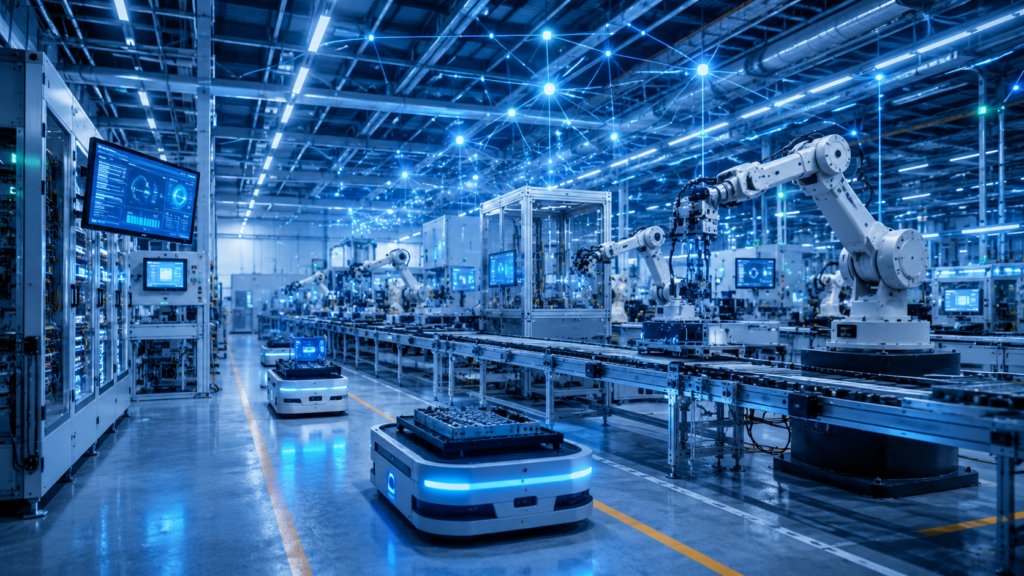
Smart Factory Solutions are changing the way modern industries design, control, and improve their manufacturing processes. Today, factories are moving beyond traditional automation systems and adopting intelligent technologies that allow machines, controllers, and digital platforms to communicate with each other. Through synchronized network control, industries can achieve better production efficiency, real-time monitoring, improved machine performance, and smarter decision-making.
In the past, industrial automation mainly focused on controlling individual machines with basic PLC programs. However, modern manufacturing requires a more connected approach where multiple systems work together as a single intelligent network. As a result, smart factories use advanced PLC systems, industrial communication networks, sensors, robotics, and data analytics to create a faster and more reliable production environment.
Moreover, the demand for higher productivity and reduced operational costs has increased the importance of connected automation solutions. Manufacturers now need systems that can monitor machine conditions, identify problems quickly, and optimize production without unnecessary downtime. Therefore, synchronized network control has become a key technology for achieving the goals of Industry 4.0.
A modern smart factory is not only about installing advanced hardware. Instead, it combines intelligent control logic, reliable communication, and continuous data analysis. For example, a Siemens S7-1500 PLC can act as the central controller that manages machines, robotic systems, sensors, and human-machine interfaces (HMIs). This creates a complete automation ecosystem where every component can share information and respond quickly to changing production requirements.
As industries continue to adopt digital transformation, Smart Factory Solutions provide a strong foundation for future manufacturing. They help businesses improve accuracy, increase efficiency, and create flexible production systems that can adapt to new challenges.
What Are Smart Factory Solutions?
Smart Factory Solutions are advanced industrial automation systems designed to connect machines, control devices, and digital technologies into one intelligent manufacturing environment. Unlike traditional factories where machines operate separately, smart factories allow different components to exchange information and work together automatically.
The main goal of these solutions is to make industrial operations more efficient, transparent, and adaptable. By using technologies such as PLC controllers, industrial networks, IoT devices, robotics, and cloud platforms, factories can collect valuable production data and use it to improve performance.
Furthermore, smart factory systems allow engineers to monitor machines in real time. Instead of waiting for equipment failure or production problems, operators can analyze machine conditions and take preventive actions. This approach reduces downtime and improves overall equipment reliability.
One important part of Smart Factory Solutions is the connection between field devices and control systems. Sensors collect information from machines, while PLC systems process this data and make intelligent decisions. For example, sensors can detect temperature changes, motor conditions, product positions, or production speed. The PLC then uses programmed logic to control motors, actuators, and other industrial components.
In addition, synchronized network control allows multiple automation devices to communicate with each other without delays. This is especially important in industries that use robotic arms, conveyor systems, packaging machines, and high-speed production lines. When every device operates in coordination, manufacturers can achieve higher accuracy and faster production cycles.
Modern smart factories also focus on data-driven improvement. Every machine generates valuable information during operation. By analyzing this data, companies can identify production trends, reduce energy consumption, and improve maintenance strategies. Therefore, data is becoming one of the most important assets in industrial automation.
Another advantage of Smart Factory Solutions is flexibility. Traditional production systems often require major changes when manufacturers introduce new products or processes. However, intelligent automation systems can be expanded and modified more easily. New machines, sensors, and software platforms can be integrated into existing networks with minimal disruption.
The combination of automation, communication, and analytics is creating a new era of industrial manufacturing. Smart factories are helping companies achieve better quality control, faster production, and improved operational efficiency. As technology continues to develop, these solutions will play an even greater role in shaping the future of global industries.
Role of Siemens PLC Systems in Smart Factory Solutions
Modern manufacturing systems require powerful controllers that can manage complex operations with speed, accuracy, and reliability. In this environment, Siemens PLC systems play an important role in building advanced automation solutions. These controllers work as the central processing unit of a factory, where they receive signals from sensors, process programmed logic, and send commands to different industrial devices.
Among various automation controllers, the Siemens S7-1500 PLC is widely used in advanced industrial applications because of its high performance and flexible communication capabilities. It is designed to handle complex automation tasks, including robotic coordination, production line control, machine monitoring, and data communication between multiple devices.
Furthermore, the use of powerful PLC systems allows industries to move from simple machine control toward intelligent manufacturing. Instead of operating individual machines separately, companies can create connected automation networks where different systems share information and work together efficiently.
Siemens S7-1500 PLC and Advanced Control
The Siemens S7-1500 PLC is considered one of the key components of modern Smart Factory Solutions because it provides fast processing, advanced diagnostics, and reliable industrial communication. It can manage large amounts of data while maintaining accurate control over machines and production processes.
One of the major advantages of this PLC is its ability to handle complex logic operations. In traditional automation systems, controllers mainly performed basic tasks such as turning motors on or off. However, advanced PLC systems can now manage detailed production sequences, monitor machine conditions, and coordinate multiple devices at the same time.
Moreover, the Siemens S7-1500 supports industrial communication technologies that help connect PLCs, HMIs, sensors, drives, and robotic systems. Through these connections, factories can achieve better synchronization between different production units.
For example, in an automated assembly line, multiple robotic arms may need to perform different tasks at precise moments. The PLC receives information from sensors, processes the data, and sends accurate commands to each robotic system. As a result, the complete production process becomes faster, safer, and more efficient.
In addition, advanced PLC systems include diagnostic features that help engineers identify problems quickly. When a machine fault occurs, the system can provide useful information about the possible cause of the issue. Therefore, maintenance teams can solve problems faster and reduce unnecessary production interruptions.
Another important feature of modern PLC systems is scalability. Industries can start with a small automation setup and expand it as production requirements increase. New sensors, machines, and communication devices can be added without replacing the complete system. This makes Smart Factory Solutions a practical choice for both small manufacturing units and large industrial facilities.
Synchronized Network Control in Industrial Automation
Synchronized network control is one of the most important technologies behind modern smart manufacturing. It allows different machines, controllers, and devices to communicate and operate together as one coordinated system.
In a traditional factory environment, machines may work independently with limited communication between them. However, this approach can create delays, reduce efficiency, and make it difficult to monitor the complete production process. With synchronized network control, every connected device can exchange real-time information and respond according to current operating conditions.
For example, a production line may include conveyors, robotic arms, sensors, variable frequency drives (VFDs), and monitoring systems. All these components need accurate timing and communication to perform correctly. A small delay between machines can affect product quality or reduce production speed. Therefore, synchronized control ensures that every part of the system works together smoothly.
Industrial communication networks such as PROFINET help achieve reliable data exchange between automation components. These networks provide fast communication between PLCs, field devices, and other industrial equipment. As a result, engineers can create highly coordinated systems that improve productivity and operational stability.
Furthermore, synchronized network control supports real-time monitoring. Operators can view machine conditions, production information, and system status through HMIs or digital dashboards. This visibility allows companies to make faster decisions and improve overall performance.
Another important benefit is improved flexibility. Modern industries often need to change production processes according to market demand. With connected automation systems, manufacturers can adjust machine operations through software changes instead of making major hardware modifications.
Industrial Networking and Real-Time Communication
Industrial networking is the foundation that connects different elements of a smart factory. Without reliable communication, even the most advanced automation equipment cannot perform at its full potential.
Smart Factory Solutions depend on strong industrial networks to transfer information between PLCs, sensors, robots, HMIs, and software platforms. These networks allow machines to share important data, which helps improve production control and system efficiency.
Real-time communication is especially important in industries where precision is required. Manufacturing sectors such as automotive, electronics, food processing, and packaging depend on accurate timing between machines. Even a small communication delay can affect product quality and production performance.
Moreover, industrial networks help collect valuable operational data. This information can be analyzed to understand machine efficiency, energy usage, and production trends. By using this data, companies can identify improvement opportunities and create better manufacturing strategies.
Cloud connectivity is also becoming an important part of industrial networking. By connecting factory systems with secure digital platforms, businesses can monitor operations remotely and analyze production data from different locations. This creates greater control and allows engineers to respond quickly to changing conditions.
As industries continue their digital transformation journey, reliable networking will remain a critical part of automation systems. The combination of powerful PLC controllers, synchronized communication, and intelligent data management is creating smarter and more efficient factories.
Robotics Integration in Smart Factory Solutions
Robotics has become an essential part of modern manufacturing because industries need faster, more accurate, and reliable production processes. When robotics systems work together with advanced PLC controllers and industrial networks, factories can achieve a higher level of automation and efficiency.
In Smart Factory Solutions, robotic systems are not used as independent machines. Instead, they become part of a connected automation environment where PLCs, sensors, and software platforms communicate continuously. This connection allows robotic equipment to perform tasks with better timing, accuracy, and flexibility.
For example, robotic arms in automotive and electronics industries often perform complex operations such as assembly, welding, packaging, and material handling. A powerful PLC system manages the communication between robots and other production equipment. The controller processes sensor information, calculates the required actions, and sends commands to complete each operation smoothly.
Moreover, synchronized network control improves robotic performance by maintaining accurate coordination between multiple machines. When several robots operate on the same production line, they must follow precise timing to avoid delays and collisions. Industrial communication networks help achieve this coordination by allowing devices to exchange information quickly.
Another advantage of robotics integration is improved product quality. Human errors can affect production consistency, especially during repetitive tasks. However, automated robotic systems can maintain the same level of accuracy throughout long production cycles. Therefore, industries can achieve better quality control while increasing production capacity.
In addition, robotics systems generate valuable operational data. Engineers can analyze information such as cycle time, energy consumption, and machine performance. This data helps companies identify areas for improvement and optimize their manufacturing processes.
Benefits of Smart Factory Solutions
Smart Factory Solutions provide many advantages for modern industries by combining automation, networking, and intelligent data management. These systems help companies improve productivity while reducing operational challenges.
Improved Production Efficiency
One of the biggest benefits of smart factory technology is increased production efficiency. Traditional manufacturing systems often require manual monitoring and adjustments. However, intelligent automation systems can automatically control processes and maintain stable production conditions.
With real-time communication between machines, companies can reduce unnecessary delays and improve workflow. PLC systems continuously monitor production activities and adjust operations according to programmed logic. As a result, factories can achieve faster production cycles and better resource utilization.
Furthermore, connected automation systems help identify performance issues before they affect production. Engineers can review machine data and make improvements that increase overall efficiency.
Real-Time Monitoring and Control
Real-time monitoring is another important feature of Smart Factory Solutions. Modern factories require accurate information about machine conditions, production output, and system performance.
Through sensors, PLC controllers, and digital dashboards, operators can view important information instantly. This allows them to detect unusual conditions and take action before serious problems occur.
Moreover, remote monitoring capabilities allow engineers to check industrial systems from different locations. This feature becomes especially useful for large facilities where multiple production areas need continuous supervision.
Reduced Downtime Through Predictive Maintenance
Machine downtime can create significant financial losses for manufacturing companies. Therefore, industries are focusing on predictive maintenance strategies that use machine data to identify possible failures.
Smart factory systems collect information from motors, sensors, drives, and other components. By analyzing this data, engineers can understand equipment conditions and schedule maintenance at the right time.
As a result, companies can reduce unexpected breakdowns and maintain continuous production. Predictive maintenance also extends equipment life because problems can be solved before they become major failures.
Better Data Analysis and Decision Making
Data plays a central role in modern industrial automation. Every connected machine generates information that can help businesses improve their operations.
Smart Factory Solutions allow companies to collect and analyze production data in real time. This information helps managers understand production trends, identify bottlenecks, and make better decisions.
Furthermore, advanced analytics tools can provide insights into energy consumption, machine performance, and product quality. These insights help industries create more efficient and sustainable manufacturing strategies.
Cloud Integration and Industry 4.0
Cloud integration has become an important part of the industrial digital transformation process. It connects factory automation systems with modern digital platforms and allows businesses to manage data more effectively.
In traditional factories, production information often remained inside individual machines or local control systems. However, cloud-based solutions allow companies to store, analyze, and access industrial data from anywhere.
Smart Factory Solutions use cloud connectivity to improve visibility across manufacturing operations. Engineers can monitor production performance, review historical data, and identify improvement opportunities without being physically present at the factory.
Moreover, cloud integration supports better collaboration between different teams. Engineers, managers, and maintenance professionals can access updated information and make faster decisions.
Industry 4.0 focuses on creating intelligent manufacturing environments where machines, software, and humans work together. Smart factories represent this vision by combining automation technology with digital intelligence.
As industries continue adopting Industry 4.0 concepts, technologies such as artificial intelligence, machine learning, and advanced analytics will further improve manufacturing capabilities.
Future of Smart Factory Automation
The future of industrial automation is moving toward more intelligent, connected, and flexible manufacturing systems. As technology continues to improve, factories will depend more on advanced control systems, robotics, and data-driven solutions.
Smart Factory Solutions will play a major role in this transformation because they provide the foundation for connected industrial environments. Companies will continue investing in automation technologies that improve efficiency, reduce costs, and support sustainable production.
Furthermore, artificial intelligence will enhance automation systems by helping machines analyze complex information and make smarter decisions. Combined with powerful PLC systems and industrial networks, AI can create even more advanced manufacturing solutions.
Another important development is the growth of digital twins. These virtual models allow engineers to simulate industrial processes before implementing changes in real machines. This approach reduces risks and improves system optimization.
In addition, cybersecurity will become increasingly important as more industrial devices connect to digital networks. Companies will need secure communication methods to protect automation systems and valuable production data.
The combination of smart technologies, reliable networking, and intelligent control will continue shaping the future of manufacturing. Industries that adopt these solutions will gain better flexibility, productivity, and competitiveness.
Conclusion
Smart Factory Solutions are transforming modern industries by connecting machines, automation systems, and digital technologies into intelligent manufacturing environments. Through synchronized network control, advanced PLC systems, robotics integration, and real-time data analysis, factories can achieve higher efficiency and improved performance.
Siemens PLC systems, industrial communication networks, and cloud-based technologies provide the foundation for future-ready automation. These solutions help businesses reduce downtime, improve decision-making, and create flexible production systems.
As Industry 4.0 continues to grow, smart manufacturing will become an essential part of global industrial development. Companies that invest in connected automation technologies can build more efficient, reliable, and competitive production environments.
The future of manufacturing belongs to intelligent systems that combine automation, data, and innovation. By adopting Smart Factory Solutions, industries can move toward a smarter and more productive industrial future.