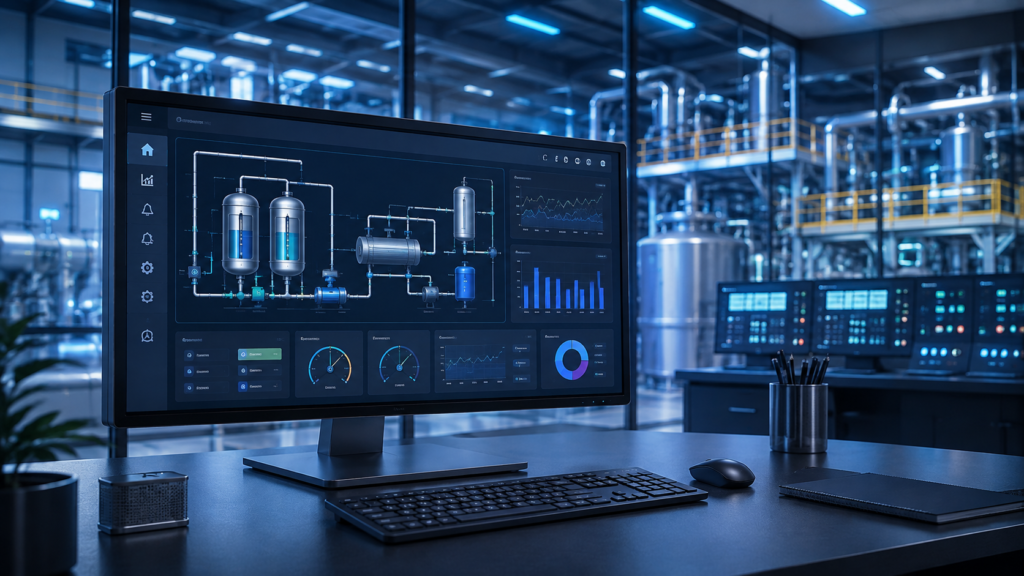
Best HMI Programming Software plays a vital role in modern industrial automation. Every factory, production line, and manufacturing plant depends on reliable HMI software to monitor equipment, control processes, and display real-time information. Choosing the Best HMI Programming Software helps engineers create intuitive operator screens, improve production efficiency, and reduce costly downtime. Whether you are a beginner learning industrial automation or an experienced engineer searching for advanced features, understanding the right HMI software is essential for long-term success.
Human Machine Interface technology has changed the way operators interact with industrial machines. Instead of relying on complex control panels filled with physical switches and indicators, industries now use graphical touchscreens and intelligent dashboards. Modern HMI software makes this possible by providing a visual environment where users can design screens, monitor live data, control equipment, and receive alarms instantly. This approach improves productivity while making industrial systems easier to operate.
Every industrial project has different requirements. Some applications require simple monitoring screens, while others demand advanced visualization, historical data logging, alarm management, recipe control, and secure remote access. Selecting the right software depends on your automation goals, hardware compatibility, and future expansion plans. A well-designed HMI project not only improves operator performance but also reduces maintenance time and operating costs.
This guide explains everything you need to know about the Best HMI Programming Software in simple language. You will learn how HMI software works, why industries depend on it, which features matter most, and how to choose software that matches your automation project. By the end of this guide, you will understand the strengths of today's leading HMI platforms and make informed decisions for your industrial automation systems.
What Is Best HMI Programming Software?
The Best HMI Programming Software is a specialized engineering application used to design, configure, test, and manage Human Machine Interface screens for industrial automation systems. Engineers use this software to build graphical interfaces that communicate with PLCs, sensors, drives, robots, and other industrial devices. These interfaces allow operators to monitor equipment, start or stop machines, adjust process values, acknowledge alarms, and review production information from one centralized display.
Unlike ordinary computer software, HMI programming software focuses on industrial communication and real-time machine control. It connects directly with automation hardware through industrial communication protocols and presents information in a clear visual format. Instead of reading raw PLC data, operators interact with meaningful graphics, gauges, trend charts, and process animations that simplify daily operations.
Modern HMI software supports touchscreen panels, industrial computers, and SCADA systems. Many solutions also provide web-based visualization, allowing engineers and supervisors to monitor production remotely through secure network connections. This flexibility makes HMI software suitable for both small automation projects and large manufacturing facilities.
Another important advantage is its ability to organize complex industrial information into user-friendly dashboards. Operators no longer need to memorize PLC memory addresses or complicated machine logic. The software transforms technical data into visual elements that anyone with proper training can understand quickly.
Why Best HMI Programming Software Matters in Industrial Automation
The Best HMI Programming Software serves as the communication bridge between people and machines. Without an efficient HMI, operators would struggle to monitor production, detect equipment problems, or control manufacturing processes effectively. A professionally designed interface improves visibility while reducing operator mistakes.
Industrial environments often involve hundreds of sensors, motors, valves, conveyors, and production stations operating simultaneously. Monitoring every device manually becomes almost impossible. HMI software solves this challenge by presenting important information through organized screens that display system status in real time.
When equipment performance changes, operators receive immediate visual notifications instead of waiting for serious failures. This quick response helps maintenance teams resolve problems before they interrupt production. As a result, manufacturers improve equipment reliability and reduce unexpected downtime.
Modern factories also depend on accurate production information for business decisions. HMI software continuously collects operational data and displays meaningful trends that help engineers identify efficiency improvements. These insights support preventive maintenance, energy optimization, and better resource management.
Another major benefit involves operator safety. Clear process visualization allows workers to understand machine conditions before performing maintenance or production tasks. Alarm notifications and warning indicators also reduce the risk of accidents by informing operators about abnormal operating conditions as soon as they occur.
Best HMI Programming Software Features You Should Understand
The Best HMI Programming Software offers far more than attractive graphics. Professional engineering software combines visualization, communication, monitoring, reporting, and diagnostic capabilities into one integrated platform.
A high-quality HMI development environment provides drag-and-drop design tools that simplify screen creation. Engineers can build professional operator interfaces without spending unnecessary time on repetitive design work. Reusable templates and graphic libraries also improve development speed while maintaining consistent screen layouts.
Real-time communication remains one of the most valuable capabilities. The software exchanges data continuously with PLC controllers, ensuring every display reflects the current machine condition. Operators receive immediate updates whenever process values change.
Alarm management represents another essential feature. Instead of relying on manual observation, the software automatically detects abnormal operating conditions and alerts operators instantly. Detailed alarm history also helps maintenance engineers investigate recurring equipment problems.
Trend visualization gives engineers the ability to monitor process performance over time. Historical graphs reveal production changes that might remain hidden during normal operation. This information supports better troubleshooting and long-term optimization.
Modern HMI software also includes user authentication, allowing administrators to control access according to employee responsibilities. Different permission levels improve security while preventing unauthorized changes to production systems.
Reporting functions provide another significant advantage. Engineers can generate production reports, maintenance summaries, and operational statistics directly from the HMI system. These reports help organizations improve decision-making through accurate industrial data.
Best HMI Programming Software and PLC Communication
The Best HMI Programming Software communicates with PLC controllers through reliable industrial communication protocols. This connection allows information to travel between machines and operator screens in real time without interrupting production.
When a sensor detects temperature, pressure, flow, or motor status, the PLC processes that information according to its control program. The HMI software then retrieves the updated values and presents them visually. Operators immediately understand machine performance because the information appears as easy-to-read graphics instead of raw numerical addresses.
Communication remains stable because industrial protocols are specifically designed for automation environments. These protocols ensure reliable data exchange even in demanding manufacturing conditions where electrical noise and continuous machine operation are common.
As industrial networks continue to evolve, modern HMI software supports Ethernet-based communication alongside traditional serial connections. This flexibility allows manufacturers to integrate existing equipment while preparing for future automation expansion.
How Best HMI Programming Software Improves Daily Operations
The Best HMI Programming Software transforms complicated industrial systems into organized visual workspaces. Operators spend less time searching for information because important process values remain available on clearly designed screens.
Production supervisors monitor equipment performance from centralized dashboards instead of walking across large manufacturing facilities. Maintenance engineers quickly identify equipment issues by reviewing alarm history, diagnostic messages, and historical trends.
Operators also perform routine production tasks more confidently because intuitive interfaces reduce confusion. Clear navigation, responsive controls, and well-organized graphics improve overall productivity while minimizing operational errors.
As manufacturing continues moving toward digital transformation, HMI software becomes more valuable than ever. Modern industries require accurate information, efficient monitoring, and reliable visualization to remain competitive. Selecting the Best HMI Programming Software provides the technological foundation needed for smarter industrial automation.
Best HMI Programming Software Comparison Before You Choose
Choosing the Best HMI Programming Software becomes much easier when you understand how different platforms serve different industrial needs. Some software focuses on simple machine interfaces, while others support large production plants with advanced visualization, reporting, and remote monitoring. The right choice depends on your automation goals, budget, hardware, and future expansion plans.
A small packaging machine may only require a basic HMI application with a few monitoring screens. A large manufacturing facility, however, often needs multiple operator stations, centralized monitoring, historical data storage, alarm management, and secure remote access. Understanding these differences helps engineers invest in software that delivers long-term value instead of creating limitations later.
Modern HMI software also differs in licensing models, supported communication protocols, development tools, and compatibility with PLC brands. Evaluating these areas before starting a project saves both time and engineering costs.
Best HMI Programming Software for Siemens Automation Projects
When industries use Siemens PLCs, many engineers prefer Siemens WinCC because it integrates smoothly with the Siemens automation ecosystem. The software allows engineers to build professional operator interfaces while maintaining reliable communication with Siemens controllers.
WinCC provides an intuitive development environment where users can create process screens, configure alarms, display trends, and monitor production data in real time. The software also supports scalable projects, making it suitable for both compact machines and complex manufacturing systems.
Another advantage is its strong integration with Siemens engineering tools. Engineers can reduce development time because configuration and communication settings remain consistent across different automation components. This approach improves project efficiency while simplifying long-term maintenance.
Industries involved in automotive production, food processing, pharmaceuticals, and water treatment frequently choose this solution because of its stability and extensive industrial support.
Best HMI Programming Software for Rockwell Automation Systems
Factories using Allen-Bradley PLCs often rely on FactoryTalk View for HMI development. This software helps engineers design modern operator interfaces that communicate efficiently with Rockwell automation products.
FactoryTalk View supports detailed graphics, alarm handling, production trends, and secure user management. Operators can easily monitor machine status, adjust process values, and respond quickly to equipment alarms.
Large manufacturing facilities appreciate its scalability because projects can grow as production requirements expand. Maintenance teams also benefit from diagnostic tools that simplify troubleshooting and reduce machine downtime.
For organizations already using Rockwell automation hardware, FactoryTalk View offers a practical and reliable development environment.
Best HMI Programming Software for Cross-Platform Industrial Applications
Many industries prefer software that works with multiple PLC brands instead of remaining limited to a single manufacturer. Cross-platform HMI software provides greater flexibility for companies operating mixed automation environments.
Ignition has become a popular solution because it supports open industrial standards and offers excellent scalability. Engineers can connect different PLC brands, collect production data, create dashboards, and provide secure remote monitoring from one centralized platform.
Its web-based visualization allows authorized users to access industrial information through browsers without installing dedicated operator software on every workstation. This flexibility makes project deployment easier while reducing maintenance requirements.
Cross-platform solutions also simplify future expansion because companies can upgrade automation equipment without replacing their entire visualization system.
Best HMI Programming Software for Budget-Friendly Automation
Not every automation project requires expensive engineering software. Smaller factories, educational institutions, and machine builders often search for affordable solutions that still provide professional functionality.
Several HMI software platforms focus on cost-effective automation while maintaining reliable communication, modern screen design, and alarm management. These solutions allow beginners to learn industrial visualization without investing in enterprise-level software.
Budget-friendly software often includes graphical editors, communication drivers, trend displays, and touchscreen support. Although advanced enterprise features may remain limited, these platforms provide excellent value for many small and medium-sized automation projects.
Choosing affordable software does not always mean sacrificing quality. Instead, engineers should evaluate which features truly support their production requirements.
Best HMI Programming Software Features That Improve Productivity
The Best HMI Programming Software includes powerful engineering tools that simplify both development and daily operation. These features allow operators and maintenance teams to work more efficiently while reducing unnecessary downtime.
A modern graphical editor enables engineers to create professional screens quickly. Instead of manually drawing every component, users can select ready-made industrial objects such as buttons, indicators, motors, pumps, valves, and gauges. This approach speeds up project development while maintaining a consistent appearance.
Real-time monitoring allows operators to observe machine performance continuously. Every process value updates automatically, giving operators immediate visibility into production conditions.
Historical trend analysis provides another important advantage. Engineers can compare process values over time to identify performance changes and optimize production efficiency. This information supports preventive maintenance and improves equipment reliability.
Alarm management also plays a significant role. Instead of discovering failures after production stops, operators receive immediate notifications whenever abnormal conditions occur. Faster responses help minimize downtime and reduce maintenance expenses.
Modern reporting tools automatically generate production summaries, operational statistics, and maintenance records. These reports support better planning while helping managers make informed business decisions.
Best HMI Programming Software Security for Industrial Systems
Cybersecurity has become an important part of industrial automation. The Best HMI Programming Software includes security features that protect production systems from unauthorized access and accidental configuration changes.
User authentication allows administrators to assign different permission levels based on employee responsibilities. Operators receive access only to the controls they need, while engineers maintain advanced configuration privileges.
Password protection prevents unauthorized users from modifying important process settings. Activity logs also record user actions, making it easier to investigate operational changes whenever necessary.
Many modern HMI platforms support encrypted communication between industrial devices and operator stations. This additional protection improves network security while helping organizations meet modern cybersecurity requirements.
As industrial facilities become more connected through digital networks, secure HMI software continues to grow in importance.
Best HMI Programming Software for Remote Monitoring
Remote monitoring has transformed industrial automation by allowing engineers to supervise equipment without remaining physically present at the production site. The Best HMI Programming Software supports secure remote visualization through modern networking technologies.
Authorized users can monitor machine status, review production trends, acknowledge alarms, and analyze operational data from remote locations. This capability improves maintenance efficiency because engineers can evaluate equipment conditions before traveling to the factory.
Remote monitoring also supports faster decision-making. Plant managers gain immediate visibility into production performance, helping them identify issues before they affect manufacturing output.
When combined with secure authentication and encrypted communication, remote access becomes a valuable tool for modern industrial operations.
Best HMI Programming Software and Future Industrial Automation
Industrial automation continues evolving with technologies such as Industrial Internet of Things (IIoT), cloud connectivity, artificial intelligence, and predictive maintenance. The Best HMI Programming Software continues evolving alongside these innovations by providing smarter visualization and improved data analysis.
Future HMI systems will deliver richer dashboards, enhanced analytics, and greater integration with connected industrial devices. Engineers will gain deeper operational insights while operators benefit from more intuitive interfaces.
Organizations that invest in modern HMI software today build a stronger foundation for future automation upgrades. Scalable software makes it easier to adopt emerging technologies without replacing existing visualization projects.
For this reason, selecting reliable HMI programming software should always consider both current production requirements and future business growth.
How to Choose the Best HMI Programming Software
Selecting the Best HMI Programming Software requires more than comparing product names. Every automation project has unique requirements, and the right software should support both current production needs and future expansion. A careful evaluation before purchasing software helps reduce engineering costs, improves productivity, and minimizes compatibility problems.
The first consideration should always be hardware compatibility. Reliable HMI software must communicate smoothly with the PLCs, sensors, drives, and industrial devices used in your facility. Strong compatibility reduces configuration time and ensures stable operation throughout the project.
Ease of use also plays an important role. A clean development environment allows engineers to design operator screens faster while reducing programming errors. Software with intuitive navigation and reusable design components helps both beginners and experienced professionals complete projects more efficiently.
Scalability is another key factor. Industrial automation systems often expand over time, so choosing software that supports future upgrades protects your investment. A scalable platform allows additional machines, production lines, and operator stations to be integrated without rebuilding the entire project.
Technical support and regular software updates also influence long-term success. Reliable vendors continuously improve security, stability, and compatibility while providing documentation and customer assistance when needed.
Common Mistakes When Choosing the Best HMI Programming Software
Many automation projects experience unnecessary delays because software selection focuses only on price. While budget matters, selecting software without evaluating its features often creates higher costs later.
One common mistake involves ignoring communication compatibility. Software that cannot communicate efficiently with industrial hardware may require additional gateways or complicated configurations. This increases project complexity and maintenance requirements.
Another mistake is overlooking future expansion. Some companies purchase software designed only for small projects and later discover that it cannot support additional production lines or advanced monitoring features.
Poor screen design also affects system performance. Overloaded operator screens with excessive graphics and unnecessary animations make important process information difficult to read. Clear layouts improve productivity and reduce operator mistakes.
Many organizations also underestimate cybersecurity. Weak password policies and unrestricted user permissions increase the risk of unauthorized system changes. Choosing software with strong security features helps protect industrial operations.
Finally, some projects ignore long-term maintenance. Software with limited documentation or poor vendor support can become difficult to manage as automation systems grow.
Best HMI Programming Software Trends in 2026
The Best HMI Programming Software continues evolving as industrial automation adopts smarter technologies. Modern manufacturing demands more than simple machine visualization. Today's HMI platforms combine real-time monitoring with advanced analytics, secure connectivity, and intelligent decision support.
Cloud integration has become increasingly important. Many industries now synchronize production information with secure cloud services to improve reporting, maintenance planning, and operational visibility across multiple facilities.
Industrial Internet of Things (IIoT) technology also influences HMI development. Connected sensors continuously generate operational data that HMI software transforms into meaningful dashboards. Engineers gain better visibility into machine performance while identifying efficiency improvements more quickly.
Artificial intelligence is another growing trend. Advanced HMI platforms increasingly use intelligent algorithms to detect unusual operating conditions and recommend maintenance actions before equipment failures occur.
Mobile accessibility continues expanding as well. Engineers and supervisors can securely monitor industrial systems through smartphones and tablets without remaining inside the control room. This flexibility improves response time and operational awareness.
Cybersecurity remains a major development area. Modern HMI software now includes stronger encryption, secure authentication, and detailed activity logging to protect connected industrial systems from evolving security threats.
Best HMI Programming Software for Different Industries
Different industries require different HMI capabilities. Although the core purpose remains the same, visualization requirements vary according to production processes.
Manufacturing plants use HMI software to supervise assembly lines, robotic systems, conveyors, and quality inspection equipment. Operators rely on real-time dashboards to maintain continuous production and reduce downtime.
Food and beverage facilities require accurate monitoring of temperature, filling operations, packaging equipment, and cleaning processes. Reliable HMI software helps maintain consistent production quality while supporting regulatory compliance.
Water treatment facilities depend on HMI systems to monitor pumps, reservoirs, pressure levels, chemical dosing, and filtration equipment. Clear visualization allows operators to manage complex infrastructure safely and efficiently.
Pharmaceutical manufacturers require precise process monitoring because product quality depends on strict environmental and production controls. Professional HMI software improves operational accuracy while supporting detailed production records.
Energy facilities also benefit from advanced HMI visualization. Engineers monitor power generation, electrical distribution, renewable energy systems, and equipment performance from centralized control rooms.
These examples demonstrate why selecting the Best HMI Programming Software depends on both industry requirements and operational objectives.
Future of Best HMI Programming Software
The future of the Best HMI Programming Software looks increasingly intelligent, connected, and user-focused. Industrial automation continues moving toward digital transformation, and HMI technology remains at the center of this progress.
Future software will deliver richer visual experiences while simplifying engineering workflows. Faster development environments, improved graphic libraries, and automated configuration tools will reduce project development time.
Predictive maintenance will become more common as HMI systems analyze historical equipment data and identify maintenance needs before failures occur. This proactive approach helps manufacturers reduce unexpected downtime and extend equipment life.
Digital twins will also influence HMI technology. Virtual representations of industrial equipment will allow engineers to test operational changes before applying them to real production systems.
As sustainability becomes a global priority, HMI software will also help industries monitor energy consumption, optimize production efficiency, and reduce waste through better operational visibility.
Frequently Asked Questions
What is the Best HMI Programming Software?
The best HMI programming software depends on your automation project, PLC platform, and operational requirements. Popular solutions offer reliable communication, intuitive screen design, alarm management, reporting, and secure monitoring.
Can beginners learn HMI programming software?
Yes. Many HMI platforms provide user-friendly development environments, making it easier for beginners to design operator screens and communicate with PLC systems.
Why is HMI software important in industrial automation?
HMI software allows operators to monitor machines, control industrial processes, view alarms, analyze production data, and improve operational efficiency through graphical interfaces.
Does HMI programming software work with every PLC?
Not every platform supports every PLC. Before selecting software, verify compatibility with your PLC model and supported industrial communication protocols.
What features should I look for in the Best HMI Programming Software?
Look for reliable communication, real-time monitoring, alarm management, historical trends, user security, reporting tools, scalability, and strong technical support.
Conclusion
Choosing the Best HMI Programming Software is an important step toward building efficient and reliable industrial automation systems. The right software helps engineers create intuitive operator interfaces, monitor equipment in real time, manage alarms, analyze production data, and improve overall operational performance. It also simplifies communication between operators and machines, making industrial processes safer and easier to control.
As automation technologies continue to evolve, modern HMI software offers greater flexibility, stronger security, and better integration with PLCs, SCADA systems, and Industrial Internet of Things (IIoT) solutions. Selecting software that matches your project requirements today can also support future expansion without unnecessary redesign or additional costs.
Whether you are a beginner learning industrial automation or an experienced engineer managing complex production facilities, investing time in choosing the Best HMI Programming Software will improve productivity, reduce downtime, and enhance system reliability. By understanding key features, compatibility, scalability, and long-term support, you can confidently select an HMI solution that delivers lasting value for your industrial automation projects.