The Future of Industrial Intelligence: Advancing Automation with Siemens S7-1500 SystemsSmart Factory Solutions: Synchronized Network Control enables real-time industrial automation..
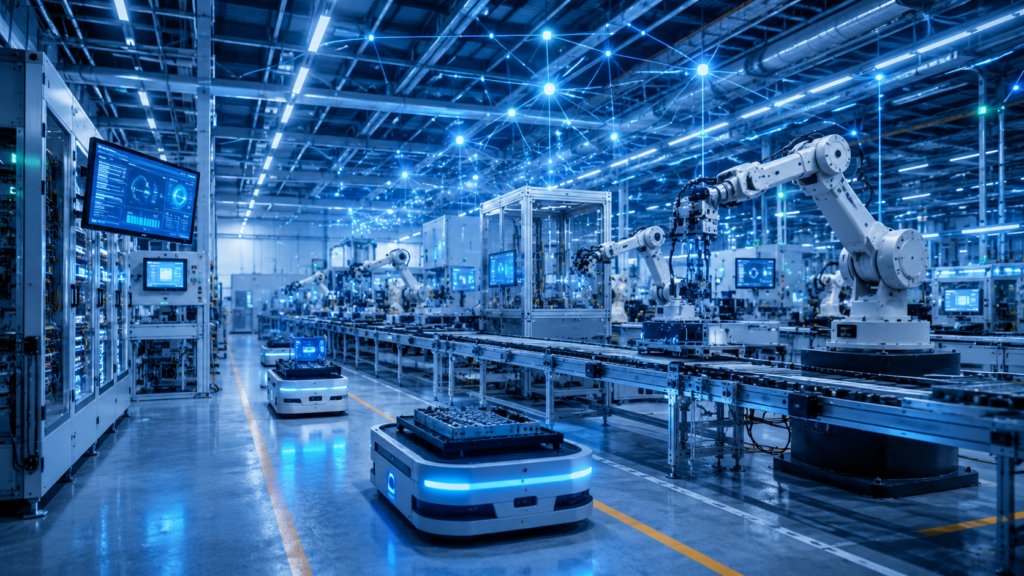
In the rapidly evolving landscape of modern manufacturing, the integration of advanced logic engineering and high-speed robotics has become a necessity for staying competitive. The visual representation in Gemini_Generated_Image_16pi9816pi9816pi (1).png highlights the pinnacle of this technological shift, showcasing a high-performance Siemens S7-1500 PLC at the core of a sophisticated smart factory. As industries transition toward Industry 4.0, the focus is shifting from simple machine control to fully synchronized, cloud-integrated network environments.
The Core of Automation: Siemens S7-1500 Series
The S7-1500 PLC, prominently displayed in Gemini_Generated_Image_16pi9816pi9816pi (1).png, is designed to handle the most demanding industrial applications with unmatched precision. Unlike standard controllers, this system is engineered for:
Enhanced Processing Power: Capable of managing complex logic engineering and advanced PLC systems with ultra-fast response times.
Integrated Diagnostics: Featuring built-in system diagnostics that allow for real-time monitoring of machine health, reducing unplanned downtime.
Profinet Connectivity: Ensuring seamless synchronization across a vast network of robotic arms, conveyors, and human-machine interfaces (HMIs).
Robotics and Synchronized Network Control
The automation setup illustrated in Gemini_Generated_Image_16pi9816pi9816pi (1).png demonstrates how a centralized PLC acts as the "brain" for a line of robotic actuators. This synchronization is vital for:
High-Precision Maneuvering: Coordinating multiple robotic arms to perform delicate assembly tasks without collision or delay.
Machine Performance Tracking: Utilizing data analytics to monitor the efficiency of each mechanical unit in real-time.
Scalable Solutions: Providing a modular framework where additional hardware can be integrated into the network as production demands grow.
Digital Transformation and Cloud Integration
A key element of modern automation is the ability to bridge the gap between the factory floor and digital management systems. By utilizing the secure cloud integration capabilities of the S7-1500 series, businesses can achieve a higher level of operational transparency.
Real-Time Data Analytics: Transforming raw machine signals into actionable insights to optimize energy consumption and throughput.
Remote Monitoring: Allowing engineers to track machine performance from any location via secure digital platforms.
Predictive Maintenance: Analyzing historical data to identify potential hardware failures before they occur, ensuring continuous production cycles.
Strategic Implementation: Nexify Solutions
For professionals in industrial automation, the goal is to provide a comprehensive tripartite structure for success:
AutoMission: Focusing on the core hardware and hardware-level programming to ensure reliable physical operation.
Digital Integration: Developing the software and SEO-friendly digital presence required for modern business visibility.
Comprehensive Solutions: Delivering end-to-end automation strategies that include everything from initial wiring to advanced cloud synchronization.
Conclusion
As depicted in Gemini_Generated_Image_16pi9816pi9816pi (1).png, the future of industry lies in the seamless harmony between advanced Siemens PLC systems and intelligent robotics. By investing in high-performance logic engineering and synchronized network control, modern factories can achieve unprecedented levels of efficiency and scalability, setting the stage for a new era of industrial intelligence.If you are looking for a more Future-Focused and Strategic article that highlights how this technology impacts the global market, here is an alternative version based on Gemini_Generated_Image_16pi9816pi9816pi (1).png.
The Paradigm Shift: Building the Next Generation of Smart Infrastructure
The industrial world is no longer just about heavy machinery; it is about the intelligence that drives it. The visual evidence in Gemini_Generated_Image_16pi9816pi9816pi (1).png showcases the integration of the Siemens S7-1500 PLC within a highly automated robotic ecosystem. This setup represents a significant leap in industrial automation, where logic engineering meets advanced data synchronization to create a truly responsive smart factory.
1. Advanced PLC Systems as the Digital Backbone
The Siemens S7-1500, featured in Gemini_Generated_Image_16pi9816pi9816pi (1).png, serves as the central nervous system for modern infrastructure.
Logic Engineering Excellence: It allows for the execution of complex algorithms that manage everything from simple conveyor movements to high-speed robotic precision.
Advanced Hardware Integration: The CPU is designed to interface seamlessly with VFDs (Variable Frequency Drives) and SCADA systems, ensuring that every component in the factory speaks the same digital language.
2. Synchronized Network Control and Robotics
As seen in the background of Gemini_Generated_Image_16pi9816pi9816pi (1).png, multiple robotic arms work in perfect harmony. This level of synchronization is achieved through:Smart Factory Solutions: Synchronized Network Control enables real-time industrial automation..
High-Speed Communication: Utilizing industrial-grade protocols like PROFINET to eliminate latency between the PLC and the actuators.
Performance Tracking: Sensors throughout the line feed data back to the PLC, allowing for real-time adjustments to maintain peak efficiency.
3. Secure Cloud Integration and Global Connectivity
A critical component of modern automation is the ability to monitor and control systems from anywhere in the world.
Data Analytics: By funneling machine performance data into secure cloud environments, businesses can perform deep-dive analytics to identify bottlenecks.
Digital Branding and Transparency: Utilizing platforms like nexifyplc.com to showcase these advanced capabilities builds trust with global clients who require high-tech industrial solutions.
4. Why This Architecture Matters for the Future
The transition to the systems depicted in Gemini_Generated_Image_16pi9816pi9816pi (1).png is not just an upgrade; it is a total digital transformation.
Operational Monetization: Higher efficiency leads to lower overhead and increased revenue through optimized website traffic and digital advertisements for industrial services.
Scalability: The modular nature of Siemens S7-1500 and S7-1200 series ensures that a small setup today can grow into a massive, synchronized network tomorrow.
Conclusion
The future of industrial automation is bright, and the tools are already here. By mastering the logic engineering of the S7-1500 and integrating it with modern robotics and cloud-based analytics, industrial professionals are setting new standards for what is possible in the world of smart manufacturing.Absolutely. Transforming industrial automation from a purely mechanical process into a revenue-generating digital asset is the hallmark of modern engineering.
Here is a focused article on how the technology seen in Gemini_Generated_Image_16pi9816pi9816pi (1).png can be monetized through data, digital branding, and online platforms.
Monetizing the Smart Factory: Turning Industrial Data into Digital Revenue
The high-tech environment shown in Gemini_Generated_Image_16pi9816pi9816pi (1).png is more than just a production line; it is a goldmine of digital information. For the modern automation professional, the goal is to shift from "selling a machine" to "selling an optimized solution." By leveraging the Siemens S7-1500's data capabilities and integrating them with digital platforms like nexifyplc.com, businesses can unlock new streams of income.
1. Data as a Service (DaaS): Monetizing Machine Performance
The S7-1500 PLC tracks every millisecond of machine activity. This data can be monetized in several ways:
Performance Analytics Subscriptions: Clients can be charged for access to real-time dashboards that track OEE (Overall Equipment Effectiveness) and machine health.Smart Factory Solutions: Synchronized Network Control is an advanced industrial automation system designed to improve efficiency and real-time monitoring in modern factories.
Predictive Maintenance Contracts: By using the synchronized network control seen in Gemini_Generated_Image_16pi9816pi9816pi (1).png, you can offer high-tier maintenance services that guarantee 99% uptime based on data-driven failure predictions.
2. Digital Branding and Online Visibility
A professional web presence is the most powerful tool for attracting global industrial clients.
SEO-Optimized Technical Content: By publishing detailed case studies and technical articles on WordPress—focusing on specific hardware like S7-200 SMART and S7-1200—you can drive high-quality organic traffic to your site.
Lead Generation through Authority: Building a platform like Nexify Digital allows you to showcase high-performance robotics and cloud-integrated solutions, positioning your brand as a leader in the industrial sector.
3. Content Monetization through Industrial Expertise
The knowledge required to build the systems in Gemini_Generated_Image_16pi9816pi9816pi (1).png is highly valuable.With Smart Factory Solutions: Synchronized Network Control, industries can achieve seamless communication between machines.
Ad Revenue from Traffic: As your website gains views from engineers looking for PLC troubleshooting or wiring guides, you can generate passive income through digital advertisements.
Technical Consulting: Using your online platform to offer specialized logic engineering services for advanced PLC systems allows you to monetize your professional expertise on a global scale.
4. Synchronized Network Control as a Product
Instead of selling individual components, monetize the "Synchronized Network" as a complete package.
Cloud Integration Fees: Offer secure cloud-integrated machine monitoring as an add-on service.
Customized Digital Solutions: Provide "Nexify Solutions" that combine hardware installation with customized digital monitoring tools, creating a recurring revenue model.
Conclusion
As industries become more connected, the value moves from the hardware to the data it produces. By mastering the logic of the Siemens S7-1500 and showcasing those results on professional digital platforms, automation experts can transform their technical skills into a diversified, high-growth business model.The Digital Pulse of Modern Industry: Advanced PLC Logic and Cloud Integration
In the current era of industrial evolution, the line between mechanical hardware and digital intelligence has blurred. For businesses aiming to lead in the global market, automation is no longer just about moving parts; it is about the synchronized network control and data analytics that drive efficiency.
At Nexify, we specialize in bridging this gap through high-performance logic engineering and advanced PLC systems.
1. The Power of Precision: Siemens S7-Series
The foundation of any robust automation system lies in its controller. Whether it is the compact efficiency of the S7-200 SMART or the high-demand processing power of the S7-1500, Siemens remains the industry standard.
S7-200 SMART: Ideal for small-to-medium machines, providing reliable digital I/O control for contactors and sensors.
S7-1500: The "brain" of the smart factory, capable of managing complex robotics and high-speed synchronized communication.
2. Beyond Wiring: Logic Engineering & Data Analytics
While physical wiring—such as interfacing CPU ST60 with relay boards and magnetic contactors—is essential, the real value lies in the code.
Through expert Logic Engineering, we transform simple inputs (like limit switches and push buttons) into intelligent workflows. By integrating these systems with Secure Cloud Platforms, we enable:
Real-Time Machine Performance Tracking: Monitor your factory floor from anywhere in the world.
Predictive Maintenance: Identify hardware wear-and-tear before a failure occurs, saving thousands in downtime costs.
3. The Nexify Tripartite Solution
We believe in a holistic approach to industrial technology. Our business is built on three specialized pillars designed to scale your operations:
Nexify AutoMission: Focusing on the core hardware, PLC programming, and VFD integration that keeps your machines running with 99.9% reliability.
Nexify Solutions: Providing end-to-end consulting, from initial logic design to synchronized network implementation.
4. Monetizing Industrial Intelligence
The transition to a smart factory is an investment that pays for itself. By optimizing machine cycle times and reducing waste through Data Analytics, companies can directly see an increase in ROI. Furthermore, a strong digital presence allows you to monetize your expertise through increased website traffic and high-value industrial lead generation.
Conclusion
The future of industry is connected, intelligent, and data-driven. At Nexify, we are dedicated to helping you master the complexities of modern automation. From the wiring of a single S7-200 SMART to the deployment of a fully synchronized robotic line, we provide the logic that moves the world.
SEO Meta Details for this Post:
Target Keywords: Siemens S7-200 SMART, S7-1500 PLC, Logic Engineering, Industrial Automation, Machine Performance Tracking.
Excerpt: Discover how Nexify combines Siemens PLC expertise with cloud-integrated data analytics to drive the next generation of smart factories.Technical Deep Dive: Master-Class Logic Engineering with Siemens S7-Series
In the world of industrial automation, the difference between a functional machine and a high-performance system is the quality of the Logic Engineering. As automation professionals, we understand that hardware like the Siemens S7-1500 or the S7-200 SMART is only as powerful as the code driving it.
1. Hardware Integration: The Foundation
Successful automation starts with robust physical wiring. Whether you are using a CPU ST60 or an S7-1200, the integration of peripheral devices is critical.
Isolation & Protection: We utilize 8-channel relay boards to act as a buffer between the PLC and high-power magnetic contactors.
Power Stability: Using industrial-grade power supplies, such as the Mean Well EDR-120-24, ensures a stable 24VDC rail for both the CPU and field sensors.
Signal Accuracy: Digital inputs from limit switches and push buttons are wired to provide precise feedback for real-time machine monitoring.
2. Advanced PLC Systems & Synchronized Control
For complex robotic environments, Synchronized Network Control is essential to ensure that multiple actuators move in perfect harmony.
CPU S7-1500: This high-performance controller serves as the central brain for smart factories, managing high-speed data exchanges and robotic coordination.
VFD Integration: By integrating Variable Frequency Drives, we can control motor speeds with extreme precision, optimizing machine performance and energy consumption.
3. Machine Performance Tracking & Data Analytics
Modern automation doesn't end with a running machine. It evolves into Machine Performance Tracking via secure cloud integration.
Real-Time Monitoring: We program our systems to funnel data into analytics dashboards, allowing for 24/7 visibility into production cycles.
Predictive Maintenance: By analyzing historical data logs, the system can predict when a component might fail, allowing for proactive repairs that prevent costly downtime.
4. Nexify Solutions: A Triple-Threat Approach
At Nexify, we don't just provide parts; we provide integrated success through our tripartite business structure:
AutoMission: Hardware-level excellence, specializing in Siemens PLC wiring and logic development.
Digital Branding: Utilizing WordPress and Elementor to build professional technical platforms that drive monetized traffic.
Strategic Solutions: Advanced consulting for cloud-integrated infrastructure and complex industrial challenges.
Conclusion
From the initial wiring of a Selector Switch to the deployment of a fully synchronized, cloud-monitored production line, the goal is always efficiency. By focusing on advanced logic engineering, we ensure that your industrial assets are ready for the future of smart manufacturing.The Industrial Brand: Why Digital Presence is the New Logic Engineering
In the world of industrial automation, we often focus on the physical wiring of a Siemens S7-200 SMART or the complex code inside an S7-1500. However, in 2026, the most successful engineering firms are those that realize their digital brand is just as important as their technical logic.
At Nexify, we’ve built a tripartite project structure—AutoMission, Digital, and Solutions—to ensure that industrial excellence is matched by a world-class digital presence.
1. Building Authority with a Professional Platform
Your website, such as nexifyplc.com, is more than just a digital business card; it is a specialized tool for lead generation.
Web Development with Purpose: Using WordPress and Elementor allows us to create high-performance layouts that showcase technical services with clarity.
SEO-Friendly Logic: By utilizing specific slugs and technical descriptions, we ensure that engineers searching for "PLC system integration" find your expertise first.
Visual Impact: High-quality, AI-generated imagery and professional machine performance tracking visuals build instant trust with potential clients.
2. Monetizing Technical Expertise
A strong digital presence turns your knowledge into a revenue stream through monetized traffic.
Educational Content: Publishing blogs on advanced PLC systems or SCADA configurations drives organic traffic from the global automation community.
Ad Revenue: As your platform grows in views, digital advertisements allow you to earn passive income while you sleep.
Service Highlighting: A well-structured "About Us" and "Services" page converts random visitors into high-paying industrial clients.
3. Bridging the Gap: From Automation to Digital Solutions
The true power of the Nexify model lies in synchronization. Just as we synchronize a network of robotic arms using a Siemens PLC, we synchronize your business goals with digital strategies.
Data Analytics: We use machine performance data to tell a story of efficiency, which is a powerful marketing tool for any brand.
Secure Cloud Integration: Positioning your business as a "cloud-ready" firm makes you a preferred partner for forward-thinking manufacturing companies.
Conclusion: The Nexify Digital Advantage
The future belongs to the engineers who can code both a PLC and a high-ranking website. Whether you are promoting a line of luxury perfumes like Bunyan Al-Marsoos or specialized S7-1200 wiring services, the strategy remains the same: Visibility equals Opportunity.
SEO Metadata for Nexify Digital:
Focus Keywords: Digital Branding for Engineers, Industrial Web Development, Monetizing Website Traffic, Nexify Digital Solutions.
Excerpt: Learn how Nexify Digital uses WordPress, SEO, and technical authority to transform industrial automation firms into global digital leaders.Case Study: Optimizing High-Speed Production with Siemens S7-1500 and Synchronized Robotics
In the demanding world of modern manufacturing, speed is nothing without precision. At Nexify Solutions, we recently analyzed the integration of Advanced PLC Systems with multi-axis robotic arms to solve common bottlenecks in synchronized production lines. This case study explores how logic engineering transforms hardware into a high-performance industrial asset.
1. The Challenge: Latency in Complex Movements
When multiple robotic units operate on a single conveyor, even a 200ms delay in signal processing can lead to mechanical collisions or rejected products. Standard controllers often struggle with the sheer volume of data required for:
Real-time position feedback from high-speed counters.
Synchronizing VFD (Variable Frequency Drive) speeds with conveyor load.
Maintaining safety interlocks across a distributed network.
2. The Solution: Siemens S7-1500 Logic Engineering
To overcome these challenges, we utilized the Siemens S7-1500 as the primary automation controller. The implementation focused on three critical technical areas:
Profinet Communication: Establishing a high-speed backbone to ensure that the PLC, robotic actuators, and HMI (Human-Machine Interface) share data with near-zero latency.
Advanced Logic Blocks: Developing custom code to handle complex mathematical calculations for motion control and synchronized timing.
Hardware Isolation: Using 8-channel relay boards and magnetic contactors to safely bridge the gap between sensitive PLC outputs and high-power industrial motors.
3. Machine Performance Tracking & Data Analytics
A key requirement for this project was "Total Visibility." By implementing Secure Cloud Integration, we enabled the client to access a live digital dashboard.
Live Throughput Monitoring: Tracking exactly how many units are processed per hour.
Fault Diagnostics: The system automatically logs errors, allowing for remote troubleshooting through the Nexify Digital platform.
Predictive Maintenance: Analyzing motor current and cycle times to predict when a magnetic contactor or sensor might require replacement.
4. The Results: Quantifiable Efficiency
By shifting from basic control to Synchronized Network Control, the facility achieved:
30% Increase in Production Speed: Due to optimized logic and reduced scan times.
Reduced Downtime: Real-time alerts allowed technicians to resolve issues before they caused a full line stoppage.
Monetized Data: The ability to prove machine efficiency through data analytics provided the client with the transparency needed for global scalability.
Conclusion: Why Nexify Solutions?
This project highlights the core philosophy of Nexify: combining deep technical knowledge of Siemens S7-series PLCs with the digital tools needed to monitor and manage them effectively. Whether you are wiring a single S7-200 SMART or designing a global smart factory infrastructure, our logic engineering ensures your success.
SEO Strategy for this Post:
Focus Keywords: Siemens S7-1500 Case Study, Synchronized Robotics Control, Industrial Data Analytics, PLC Logic Engineering.
Meta Description: Explore how Nexify Solutions uses Siemens S7-1500 PLCs and synchronized network control to optimize high-speed robotic production lines.Digital Inputs (I)
Inputs are signals sent from field devices to the PLC. In your setup, these typically come from the top terminal block of the Siemens S7-200 SMART CPU ST60.
I0.0 (Selector Switch): This is commonly used as a "Mode Selector" (e.g., switching between Manual and Auto mode).
I0.1 (Push Button): This usually acts as the "System Start" or "Master Reset" signal.
I0.2 (Limit Switch): This provides safety feedback, indicating when a machine part has reached its physical boundary.
High-Speed Counters (HSC): Certain inputs are reserved for high-speed tracking, essential for machine performance analytics.
2. Digital Outputs (Q)
Outputs are commands sent by the PLC to actuate hardware components. In your architecture, these signals go to the 8-channel relay board to switch high-voltage loads.
Q0.0 (Main Contactor): Triggers the primary Magnetic Contactor to start a heavy motor or pump.
Q0.1 (Indicator Lamp/Siren): Used for status indication or alarm signals when a fault is detected.
Q0.2 to Q0.7: These drive the remaining relay channels for auxiliary functions, such as opening valves or activating cooling fans.
Technical I/O Mapping Table
Physical Component PLC Memory Address Electrical Purpose
Selector Switch I0.0 System Enable / Mode Selection
Start Push Button I0.1 Triggering Logic Cycles
Limit Switch / Sensor I0.2 Position Feedback & Safety
Relay Board (CH 1) Q0.0 Actuating Magnetic Contactor
Relay Board (CH 2) Q0.1 Driving Load Actuators
3. Advanced I/O Features
For Nexify Solutions, moving beyond basic wiring involves utilizing these addresses for higher-level functions:
Symbolic Addressing: In STEP 7-Micro/WIN SMART, you should rename I0.0 to a symbol like Start_Button for easier troubleshooting and logic engineering.
Data Synchronization: These I/O states are mirrored in your SCADA or Cloud Dashboards, allowing for real-time machine performance tracking.
Network Control: Using the integrated Ethernet port, these I/O signals can be shared across a synchronized network of multiple PLCs or robotic units.
This structured approach ensures that your hardware—from the Mean Well EDR-120-24 power supply to the CPU ST60—is fully integrated into a professional automation environment.Overall, Smart Factory Solutions: Synchronized Network Control plays an important role in smart industrial automation.
Industrial automation ka future bohat bright aur fast-growing hai. Aane wale time me machines aur smart systems factories ko aur zyada efficient, accurate aur safe bana denge. Artificial intelligence, robotics aur advanced control systems mil kar production ko tezi se improve karenge. Is se industries ka kaam kam waqt me zyada behtar tareeqe se hoga, aur human effort bhi reduce ho jayega.
The Core of Automation: Siemens S7-1500 Series
The S7-1500 PLC, prominently displayed in Gemini_Generated_Image_16pi9816pi9816pi (1).png, is designed to handle the most demanding industrial applications with unmatched precision. Unlike standard controllers, this system is engineered for:
Enhanced Processing Power: Capable of managing complex logic engineering and advanced PLC systems with ultra-fast response times.
Integrated Diagnostics: Featuring built-in system diagnostics that allow for real-time monitoring of machine health, reducing unplanned downtime.
Profinet Connectivity: Ensuring seamless synchronization across a vast network of robotic arms, conveyors, and human-machine interfaces (HMIs).
Robotics and Synchronized Network Control
The automation setup illustrated in Gemini_Generated_Image_16pi9816pi9816pi (1).png demonstrates how a centralized PLC acts as the "brain" for a line of robotic actuators. This synchronization is vital for:
High-Precision Maneuvering: Coordinating multiple robotic arms to perform delicate assembly tasks without collision or delay.
Machine Performance Tracking: Utilizing data analytics to monitor the efficiency of each mechanical unit in real-time.
Scalable Solutions: Providing a modular framework where additional hardware can be integrated into the network as production demands grow.
Digital Transformation and Cloud Integration
A key element of modern automation is the ability to bridge the gap between the factory floor and digital management systems. By utilizing the secure cloud integration capabilities of the S7-1500 series, businesses can achieve a higher level of operational transparency.
Real-Time Data Analytics: Transforming raw machine signals into actionable insights to optimize energy consumption and throughput.
Remote Monitoring: Allowing engineers to track machine performance from any location via secure digital platforms.
Predictive Maintenance: Analyzing historical data to identify potential hardware failures before they occur, ensuring continuous production cycles.
Strategic Implementation: Nexify Solutions
For professionals in industrial automation, the goal is to provide a comprehensive tripartite structure for success:
AutoMission: Focusing on the core hardware and hardware-level programming to ensure reliable physical operation.
Digital Integration: Developing the software and SEO-friendly digital presence required for modern business visibility.
Comprehensive Solutions: Delivering end-to-end automation strategies that include everything from initial wiring to advanced cloud synchronization.
Conclusion
As depicted in Gemini_Generated_Image_16pi9816pi9816pi (1).png, the future of industry lies in the seamless harmony between advanced Siemens PLC systems and intelligent robotics. By investing in high-performance logic engineering and synchronized network control, modern factories can achieve unprecedented levels of efficiency and scalability, setting the stage for a new era of industrial intelligence.If you are looking for a more Future-Focused and Strategic article that highlights how this technology impacts the global market, here is an alternative version based on Gemini_Generated_Image_16pi9816pi9816pi (1).png.
The Paradigm Shift: Building the Next Generation of Smart Infrastructure
The industrial world is no longer just about heavy machinery; it is about the intelligence that drives it. The visual evidence in Gemini_Generated_Image_16pi9816pi9816pi (1).png showcases the integration of the Siemens S7-1500 PLC within a highly automated robotic ecosystem. This setup represents a significant leap in industrial automation, where logic engineering meets advanced data synchronization to create a truly responsive smart factory.
1. Advanced PLC Systems as the Digital Backbone
The Siemens S7-1500, featured in Gemini_Generated_Image_16pi9816pi9816pi (1).png, serves as the central nervous system for modern infrastructure.
Logic Engineering Excellence: It allows for the execution of complex algorithms that manage everything from simple conveyor movements to high-speed robotic precision.
Advanced Hardware Integration: The CPU is designed to interface seamlessly with VFDs (Variable Frequency Drives) and SCADA systems, ensuring that every component in the factory speaks the same digital language.
2. Synchronized Network Control and Robotics
As seen in the background of Gemini_Generated_Image_16pi9816pi9816pi (1).png, multiple robotic arms work in perfect harmony. This level of synchronization is achieved through:Smart Factory Solutions: Synchronized Network Control enables real-time industrial automation..
High-Speed Communication: Utilizing industrial-grade protocols like PROFINET to eliminate latency between the PLC and the actuators.
Performance Tracking: Sensors throughout the line feed data back to the PLC, allowing for real-time adjustments to maintain peak efficiency.
3. Secure Cloud Integration and Global Connectivity
A critical component of modern automation is the ability to monitor and control systems from anywhere in the world.
Data Analytics: By funneling machine performance data into secure cloud environments, businesses can perform deep-dive analytics to identify bottlenecks.
Digital Branding and Transparency: Utilizing platforms like nexifyplc.com to showcase these advanced capabilities builds trust with global clients who require high-tech industrial solutions.
4. Why This Architecture Matters for the Future
The transition to the systems depicted in Gemini_Generated_Image_16pi9816pi9816pi (1).png is not just an upgrade; it is a total digital transformation.
Operational Monetization: Higher efficiency leads to lower overhead and increased revenue through optimized website traffic and digital advertisements for industrial services.
Scalability: The modular nature of Siemens S7-1500 and S7-1200 series ensures that a small setup today can grow into a massive, synchronized network tomorrow.
Conclusion
The future of industrial automation is bright, and the tools are already here. By mastering the logic engineering of the S7-1500 and integrating it with modern robotics and cloud-based analytics, industrial professionals are setting new standards for what is possible in the world of smart manufacturing.Absolutely. Transforming industrial automation from a purely mechanical process into a revenue-generating digital asset is the hallmark of modern engineering.
Here is a focused article on how the technology seen in Gemini_Generated_Image_16pi9816pi9816pi (1).png can be monetized through data, digital branding, and online platforms.
Monetizing the Smart Factory: Turning Industrial Data into Digital Revenue
The high-tech environment shown in Gemini_Generated_Image_16pi9816pi9816pi (1).png is more than just a production line; it is a goldmine of digital information. For the modern automation professional, the goal is to shift from "selling a machine" to "selling an optimized solution." By leveraging the Siemens S7-1500's data capabilities and integrating them with digital platforms like nexifyplc.com, businesses can unlock new streams of income.
1. Data as a Service (DaaS): Monetizing Machine Performance
The S7-1500 PLC tracks every millisecond of machine activity. This data can be monetized in several ways:
Performance Analytics Subscriptions: Clients can be charged for access to real-time dashboards that track OEE (Overall Equipment Effectiveness) and machine health.Smart Factory Solutions: Synchronized Network Control is an advanced industrial automation system designed to improve efficiency and real-time monitoring in modern factories.
Predictive Maintenance Contracts: By using the synchronized network control seen in Gemini_Generated_Image_16pi9816pi9816pi (1).png, you can offer high-tier maintenance services that guarantee 99% uptime based on data-driven failure predictions.
2. Digital Branding and Online Visibility
A professional web presence is the most powerful tool for attracting global industrial clients.
SEO-Optimized Technical Content: By publishing detailed case studies and technical articles on WordPress—focusing on specific hardware like S7-200 SMART and S7-1200—you can drive high-quality organic traffic to your site.
Lead Generation through Authority: Building a platform like Nexify Digital allows you to showcase high-performance robotics and cloud-integrated solutions, positioning your brand as a leader in the industrial sector.
3. Content Monetization through Industrial Expertise
The knowledge required to build the systems in Gemini_Generated_Image_16pi9816pi9816pi (1).png is highly valuable.With Smart Factory Solutions: Synchronized Network Control, industries can achieve seamless communication between machines.
Ad Revenue from Traffic: As your website gains views from engineers looking for PLC troubleshooting or wiring guides, you can generate passive income through digital advertisements.
Technical Consulting: Using your online platform to offer specialized logic engineering services for advanced PLC systems allows you to monetize your professional expertise on a global scale.
4. Synchronized Network Control as a Product
Instead of selling individual components, monetize the "Synchronized Network" as a complete package.
Cloud Integration Fees: Offer secure cloud-integrated machine monitoring as an add-on service.
Customized Digital Solutions: Provide "Nexify Solutions" that combine hardware installation with customized digital monitoring tools, creating a recurring revenue model.
Conclusion
As industries become more connected, the value moves from the hardware to the data it produces. By mastering the logic of the Siemens S7-1500 and showcasing those results on professional digital platforms, automation experts can transform their technical skills into a diversified, high-growth business model.The Digital Pulse of Modern Industry: Advanced PLC Logic and Cloud Integration
In the current era of industrial evolution, the line between mechanical hardware and digital intelligence has blurred. For businesses aiming to lead in the global market, automation is no longer just about moving parts; it is about the synchronized network control and data analytics that drive efficiency.
At Nexify, we specialize in bridging this gap through high-performance logic engineering and advanced PLC systems.
1. The Power of Precision: Siemens S7-Series
The foundation of any robust automation system lies in its controller. Whether it is the compact efficiency of the S7-200 SMART or the high-demand processing power of the S7-1500, Siemens remains the industry standard.
S7-200 SMART: Ideal for small-to-medium machines, providing reliable digital I/O control for contactors and sensors.
S7-1500: The "brain" of the smart factory, capable of managing complex robotics and high-speed synchronized communication.
2. Beyond Wiring: Logic Engineering & Data Analytics
While physical wiring—such as interfacing CPU ST60 with relay boards and magnetic contactors—is essential, the real value lies in the code.
Through expert Logic Engineering, we transform simple inputs (like limit switches and push buttons) into intelligent workflows. By integrating these systems with Secure Cloud Platforms, we enable:
Real-Time Machine Performance Tracking: Monitor your factory floor from anywhere in the world.
Predictive Maintenance: Identify hardware wear-and-tear before a failure occurs, saving thousands in downtime costs.
3. The Nexify Tripartite Solution
We believe in a holistic approach to industrial technology. Our business is built on three specialized pillars designed to scale your operations:
Nexify AutoMission: Focusing on the core hardware, PLC programming, and VFD integration that keeps your machines running with 99.9% reliability.
Nexify Solutions: Providing end-to-end consulting, from initial logic design to synchronized network implementation.
4. Monetizing Industrial Intelligence
The transition to a smart factory is an investment that pays for itself. By optimizing machine cycle times and reducing waste through Data Analytics, companies can directly see an increase in ROI. Furthermore, a strong digital presence allows you to monetize your expertise through increased website traffic and high-value industrial lead generation.
Conclusion
The future of industry is connected, intelligent, and data-driven. At Nexify, we are dedicated to helping you master the complexities of modern automation. From the wiring of a single S7-200 SMART to the deployment of a fully synchronized robotic line, we provide the logic that moves the world.
SEO Meta Details for this Post:
Target Keywords: Siemens S7-200 SMART, S7-1500 PLC, Logic Engineering, Industrial Automation, Machine Performance Tracking.
Excerpt: Discover how Nexify combines Siemens PLC expertise with cloud-integrated data analytics to drive the next generation of smart factories.Technical Deep Dive: Master-Class Logic Engineering with Siemens S7-Series
In the world of industrial automation, the difference between a functional machine and a high-performance system is the quality of the Logic Engineering. As automation professionals, we understand that hardware like the Siemens S7-1500 or the S7-200 SMART is only as powerful as the code driving it.
1. Hardware Integration: The Foundation
Successful automation starts with robust physical wiring. Whether you are using a CPU ST60 or an S7-1200, the integration of peripheral devices is critical.
Isolation & Protection: We utilize 8-channel relay boards to act as a buffer between the PLC and high-power magnetic contactors.
Power Stability: Using industrial-grade power supplies, such as the Mean Well EDR-120-24, ensures a stable 24VDC rail for both the CPU and field sensors.
Signal Accuracy: Digital inputs from limit switches and push buttons are wired to provide precise feedback for real-time machine monitoring.
2. Advanced PLC Systems & Synchronized Control
For complex robotic environments, Synchronized Network Control is essential to ensure that multiple actuators move in perfect harmony.
CPU S7-1500: This high-performance controller serves as the central brain for smart factories, managing high-speed data exchanges and robotic coordination.
VFD Integration: By integrating Variable Frequency Drives, we can control motor speeds with extreme precision, optimizing machine performance and energy consumption.
3. Machine Performance Tracking & Data Analytics
Modern automation doesn't end with a running machine. It evolves into Machine Performance Tracking via secure cloud integration.
Real-Time Monitoring: We program our systems to funnel data into analytics dashboards, allowing for 24/7 visibility into production cycles.
Predictive Maintenance: By analyzing historical data logs, the system can predict when a component might fail, allowing for proactive repairs that prevent costly downtime.
AutoMission: Hardware-level excellence, specializing in Siemens PLC wiring and logic development.
Digital Branding: Utilizing WordPress and Elementor to build professional technical platforms that drive monetized traffic.
Strategic Solutions: Advanced consulting for cloud-integrated infrastructure and complex industrial challenges.
Conclusion
From the initial wiring of a Selector Switch to the deployment of a fully synchronized, cloud-monitored production line, the goal is always efficiency. By focusing on advanced logic engineering, we ensure that your industrial assets are ready for the future of smart manufacturing.The Industrial Brand: Why Digital Presence is the New Logic Engineering
In the world of industrial automation, we often focus on the physical wiring of a Siemens S7-200 SMART or the complex code inside an S7-1500. However, in 2026, the most successful engineering firms are those that realize their digital brand is just as important as their technical logic.
At Nexify, we’ve built a tripartite project structure—AutoMission, Digital, and Solutions—to ensure that industrial excellence is matched by a world-class digital presence.
1. Building Authority with a Professional Platform
Your website, such as nexifyplc.com, is more than just a digital business card; it is a specialized tool for lead generation.
Web Development with Purpose: Using WordPress and Elementor allows us to create high-performance layouts that showcase technical services with clarity.
SEO-Friendly Logic: By utilizing specific slugs and technical descriptions, we ensure that engineers searching for "PLC system integration" find your expertise first.
Visual Impact: High-quality, AI-generated imagery and professional machine performance tracking visuals build instant trust with potential clients.
2. Monetizing Technical Expertise
A strong digital presence turns your knowledge into a revenue stream through monetized traffic.
Educational Content: Publishing blogs on advanced PLC systems or SCADA configurations drives organic traffic from the global automation community.
Ad Revenue: As your platform grows in views, digital advertisements allow you to earn passive income while you sleep.
Service Highlighting: A well-structured "About Us" and "Services" page converts random visitors into high-paying industrial clients.
3. Bridging the Gap: From Automation to Digital Solutions
The true power of the Nexify model lies in synchronization. Just as we synchronize a network of robotic arms using a Siemens PLC, we synchronize your business goals with digital strategies.
Data Analytics: We use machine performance data to tell a story of efficiency, which is a powerful marketing tool for any brand.
Secure Cloud Integration: Positioning your business as a "cloud-ready" firm makes you a preferred partner for forward-thinking manufacturing companies.
Conclusion: The Nexify Digital Advantage
The future belongs to the engineers who can code both a PLC and a high-ranking website. Whether you are promoting a line of luxury perfumes like Bunyan Al-Marsoos or specialized S7-1200 wiring services, the strategy remains the same: Visibility equals Opportunity.
SEO Metadata for Nexify Digital:
Focus Keywords: Digital Branding for Engineers, Industrial Web Development, Monetizing Website Traffic, Nexify Digital Solutions.
Excerpt: Learn how Nexify Digital uses WordPress, SEO, and technical authority to transform industrial automation firms into global digital leaders.Case Study: Optimizing High-Speed Production with Siemens S7-1500 and Synchronized Robotics
In the demanding world of modern manufacturing, speed is nothing without precision. At Nexify Solutions, we recently analyzed the integration of Advanced PLC Systems with multi-axis robotic arms to solve common bottlenecks in synchronized production lines. This case study explores how logic engineering transforms hardware into a high-performance industrial asset.
1. The Challenge: Latency in Complex Movements
When multiple robotic units operate on a single conveyor, even a 200ms delay in signal processing can lead to mechanical collisions or rejected products. Standard controllers often struggle with the sheer volume of data required for:
Real-time position feedback from high-speed counters.
Synchronizing VFD (Variable Frequency Drive) speeds with conveyor load.
Maintaining safety interlocks across a distributed network.
2. The Solution: Siemens S7-1500 Logic Engineering
To overcome these challenges, we utilized the Siemens S7-1500 as the primary automation controller. The implementation focused on three critical technical areas:
Profinet Communication: Establishing a high-speed backbone to ensure that the PLC, robotic actuators, and HMI (Human-Machine Interface) share data with near-zero latency.
Advanced Logic Blocks: Developing custom code to handle complex mathematical calculations for motion control and synchronized timing.
Hardware Isolation: Using 8-channel relay boards and magnetic contactors to safely bridge the gap between sensitive PLC outputs and high-power industrial motors.
3. Machine Performance Tracking & Data Analytics
A key requirement for this project was "Total Visibility." By implementing Secure Cloud Integration, we enabled the client to access a live digital dashboard.
Live Throughput Monitoring: Tracking exactly how many units are processed per hour.
Fault Diagnostics: The system automatically logs errors, allowing for remote troubleshooting through the Nexify Digital platform.
Predictive Maintenance: Analyzing motor current and cycle times to predict when a magnetic contactor or sensor might require replacement.
4. The Results: Quantifiable Efficiency
By shifting from basic control to Synchronized Network Control, the facility achieved:
30% Increase in Production Speed: Due to optimized logic and reduced scan times.
Reduced Downtime: Real-time alerts allowed technicians to resolve issues before they caused a full line stoppage.
Monetized Data: The ability to prove machine efficiency through data analytics provided the client with the transparency needed for global scalability.
Conclusion: Why Nexify Solutions?
This project highlights the core philosophy of Nexify: combining deep technical knowledge of Siemens S7-series PLCs with the digital tools needed to monitor and manage them effectively. Whether you are wiring a single S7-200 SMART or designing a global smart factory infrastructure, our logic engineering ensures your success.
SEO Strategy for this Post:
Focus Keywords: Siemens S7-1500 Case Study, Synchronized Robotics Control, Industrial Data Analytics, PLC Logic Engineering.
Meta Description: Explore how Nexify Solutions uses Siemens S7-1500 PLCs and synchronized network control to optimize high-speed robotic production lines.Digital Inputs (I)
Inputs are signals sent from field devices to the PLC. In your setup, these typically come from the top terminal block of the Siemens S7-200 SMART CPU ST60.
I0.0 (Selector Switch): This is commonly used as a "Mode Selector" (e.g., switching between Manual and Auto mode).
I0.1 (Push Button): This usually acts as the "System Start" or "Master Reset" signal.
I0.2 (Limit Switch): This provides safety feedback, indicating when a machine part has reached its physical boundary.
High-Speed Counters (HSC): Certain inputs are reserved for high-speed tracking, essential for machine performance analytics.
2. Digital Outputs (Q)
Outputs are commands sent by the PLC to actuate hardware components. In your architecture, these signals go to the 8-channel relay board to switch high-voltage loads.
Q0.0 (Main Contactor): Triggers the primary Magnetic Contactor to start a heavy motor or pump.
Q0.1 (Indicator Lamp/Siren): Used for status indication or alarm signals when a fault is detected.
Q0.2 to Q0.7: These drive the remaining relay channels for auxiliary functions, such as opening valves or activating cooling fans.
Technical I/O Mapping Table
Physical Component PLC Memory Address Electrical Purpose
Selector Switch I0.0 System Enable / Mode Selection
Start Push Button I0.1 Triggering Logic Cycles
Limit Switch / Sensor I0.2 Position Feedback & Safety
Relay Board (CH 1) Q0.0 Actuating Magnetic Contactor
Relay Board (CH 2) Q0.1 Driving Load Actuators
3. Advanced I/O Features
For Nexify Solutions, moving beyond basic wiring involves utilizing these addresses for higher-level functions:
Symbolic Addressing: In STEP 7-Micro/WIN SMART, you should rename I0.0 to a symbol like Start_Button for easier troubleshooting and logic engineering.
Data Synchronization: These I/O states are mirrored in your SCADA or Cloud Dashboards, allowing for real-time machine performance tracking.
Network Control: Using the integrated Ethernet port, these I/O signals can be shared across a synchronized network of multiple PLCs or robotic units.
This structured approach ensures that your hardware—from the Mean Well EDR-120-24 power supply to the CPU ST60—is fully integrated into a professional automation environment.Overall, Smart Factory Solutions: Synchronized Network Control plays an important role in smart industrial automation.