Variable Frequency Drives (VFDs) are widely used in industrial automation to control motor speed, improve energy efficiency, and support smoother machine operation. However, like other electrical equipment, a VFD needs regular attention to maintain reliable performance. Proper VFD Maintenance can help identify developing problems before they cause unexpected downtime or expensive repairs.
Why VFD Maintenance Is Important
Industrial environments often expose VFDs to dust, heat, vibration, moisture, and electrical stress. Over time, these conditions can affect cooling systems, electrical connections, and internal components. Therefore, routine inspection should be included in the overall maintenance plan of equipment.
When maintenance is performed regularly, abnormal conditions can be identified earlier. As a result, minor issues can often be addressed before they develop into serious faults. This approach also helps maintain stable motor operation and supports longer equipment service life.
Checking the VFD Environment
The environment around a VFD should be inspected regularly. Adequate airflow must be maintained because excessive heat can affect the performance and reliability of electronic components. Air vents, cooling fans, and filters should therefore be checked for dust or blockage.
In addition, the control cabinet should be kept clean and dry. If excessive dust or moisture is noticed, the underlying cause should be investigated and corrected. By maintaining suitable operating conditions, unnecessary thermal and environmental stress can be reduced.
Inspecting Electrical Connections
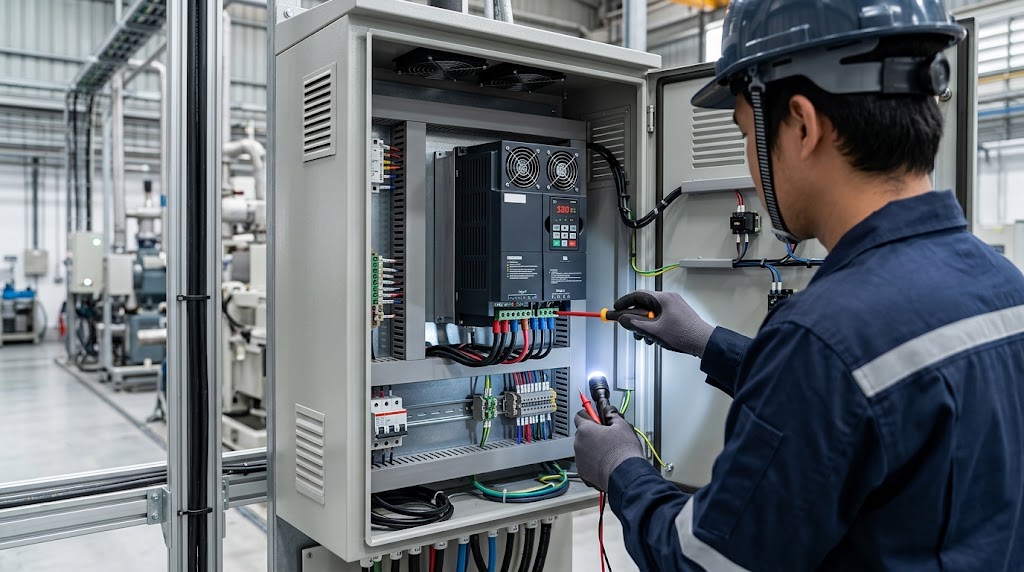
Loose or damaged electrical connections can create additional resistance and heat. For this reason, terminals, wiring, and other accessible connections should be inspected according to the equipment manufacturer's maintenance procedures.
Any unusual discoloration, damaged insulation, or signs of overheating should be investigated. However, electrical inspection and servicing should only be carried out by qualified personnel while following appropriate safety procedures.
Regular inspection, proper cleaning, and suitable operating conditions together form the foundation of effective VFD Maintenance. These basic practices can significantly support reliable operation in industrial applications.
VFD Maintenance and Cooling System Checks
A VFD generates heat during normal operation, especially when it runs under demanding loads. The cooling system therefore plays an important role in maintaining stable performance. Technicians should inspect cooling fans, air vents, and filters regularly to make sure airflow remains clear.
Dust can restrict airflow and cause the drive temperature to rise. Regular cleaning helps the cooling system work efficiently. If a cooling fan makes unusual noise or shows signs of failure, technicians should replace it according to the manufacturer's instructions.
VFD Maintenance for Electrical Connections
Electrical connections deserve regular attention because loose terminals can create heat and unstable operation. Technicians should inspect input terminals, output connections, control wiring, and grounding connections during scheduled maintenance.
They should also look for damaged insulation, discoloration, or signs of overheating. Proper tightening procedures should always follow the manufacturer's specifications. This simple step can reduce connection-related faults and support reliable motor operation.
Monitoring VFD Operating Conditions
Modern drives often provide useful information about voltage, current, temperature, frequency, and fault history. Technicians can use these readings to identify unusual operating patterns before they become serious problems.
For example, a gradual increase in operating temperature may indicate poor ventilation or excessive load. Similarly, repeated fault messages can point toward an underlying electrical or mechanical issue. Monitoring these conditions makes VFD Maintenance more proactive instead of relying only on repairs after a failure.
VFD Maintenance and Preventive Inspection
A preventive inspection should follow a consistent schedule based on the operating environment and manufacturer's recommendations. High-temperature, dusty, or heavily loaded applications may require more frequent checks than clean and controlled environments.
By combining visual inspection, cleaning, connection checks, cooling-system checks, and operating-data monitoring, maintenance teams can keep VFD systems in better working condition and reduce unexpected interruptions.
VFD Maintenance for Preventing Common Problems
Regular VFD Maintenance helps technicians detect conditions that can lead to drive failure. Excessive heat, blocked ventilation, loose connections, and unstable power can gradually affect drive performance. Early inspection allows maintenance teams to address these conditions before they create costly interruptions.
Another important step involves checking the motor and drive together. A VFD may operate correctly while an overloaded or poorly maintained motor creates additional stress. Therefore, technicians should consider motor current, load conditions, vibration, and unusual operating sounds during routine inspections.
VFD Maintenance and Fault History
Most modern VFDs record fault codes and operating events. Reviewing this information can provide useful clues about recurring problems. Instead of simply resetting a fault, technicians should investigate why it occurred.
For example, repeated overcurrent faults may indicate excessive mechanical load, incorrect acceleration settings, or a motor-related problem. Similarly, repeated overheating warnings may point toward poor airflow or an unsuitable installation environment.
Safe VFD Maintenance Practices
Safety should remain a priority whenever technicians inspect or service a VFD. Before working on electrical equipment, qualified personnel should follow the manufacturer's shutdown procedures and applicable electrical safety requirements.
The drive should also have enough time to discharge stored electrical energy before anyone accesses internal components. Technicians should use appropriate personal protective equipment and verify that the equipment is safe to work on.
Building a Practical Maintenance Schedule
A practical maintenance schedule makes routine inspections easier to manage. Basic visual checks can be performed regularly, while deeper inspections can follow the manufacturer's recommended intervals and the demands of the application.
Maintenance records should include inspection dates, observed conditions, fault history, cleaning activities, and replaced components. These records help technicians identify recurring issues and make better maintenance decisions over time.
VFD Maintenance and Power Quality
Power quality can have a direct effect on VFD performance. Voltage fluctuations, electrical noise, and phase-related issues may create unwanted stress on the drive. Therefore, technicians should monitor the incoming power when unusual faults or unstable operation occur.
A stable power supply helps the VFD operate within its intended conditions. If power quality problems continue, the electrical system should be checked to find the actual source. This approach prevents technicians from repeatedly resetting faults without addressing the underlying problem.
VFD Maintenance and Motor Compatibility
The motor and VFD should work within their recommended operating ranges. Technicians should check motor voltage, rated current, frequency, and power information against the drive settings. Incorrect parameters can affect motor performance and may increase electrical or thermal stress.
Motor cables also deserve attention during routine inspections. Damaged insulation, poor connections, or unsuitable cable installation can create operational problems. Regular checks can help identify these issues before they affect production.
VFD Maintenance in High-Demand Applications
Some industrial applications place greater demands on a VFD. Conveyors, pumps, compressors, fans, and other machines may operate for long periods or experience frequent starting and stopping. These conditions can increase heat generation and electrical stress.
For such applications, maintenance teams should pay closer attention to temperature, load levels, cooling performance, and fault history. A maintenance schedule should also reflect the actual working conditions rather than relying only on a fixed calendar.
Using Maintenance Records Effectively
Good records can make VFD Maintenance more useful over time. Technicians can record operating temperatures, recurring faults, inspection findings, cleaning dates, and component replacements. This information creates a clear history of the drive's condition.
When the same fault appears repeatedly, previous records can help identify patterns. As a result, maintenance teams can investigate recurring causes instead of treating every fault as a separate event.
VFD Maintenance Secrets That Are Often Overlooked
One useful VFD Maintenance practice is checking how the drive behaves during normal operation, not only when a fault appears. Small changes in motor sound, temperature, current, or acceleration can provide early warning signs. Technicians who compare these readings with previous records can often spot problems sooner.
Another overlooked area is the control cabinet itself. A clean cabinet with proper airflow helps the VFD release heat more effectively. However, simply cleaning the cabinet is not enough. Technicians should also check whether nearby heat sources or poor cabinet layout are increasing the drive's operating temperature.
Checking Capacitor Condition
DC-link capacitors play an important role inside many VFDs. Their condition can change with age, temperature, and operating stress. Warning signs may include unusual drive behavior, repeated faults, or increased electrical ripple.
Instead of waiting for a complete failure, maintenance teams should follow the manufacturer's inspection and replacement guidance. This is especially important for drives operating continuously in demanding environments.
Watch for Harmonics and Electrical Noise
VFDs can introduce harmonic currents into an electrical system. In some installations, excessive harmonics may affect other equipment or increase electrical losses. Electrical noise can also interfere with sensitive control and communication circuits.
Where these issues are suspected, technicians should evaluate the installation using suitable measurement equipment. Proper grounding, cable routing, filters, and other corrective measures should be selected according to the system requirements.
Keep VFD Parameters Backed Up
A simple but valuable maintenance habit is keeping a record of important VFD parameters. If a drive needs replacement, technicians can use the saved settings to restore operation more efficiently.
The backup should include motor data, acceleration and deceleration settings, control mode, protection settings, and application-specific parameters. This small step can save significant troubleshooting time after a drive replacement.
A Practical Maintenance Mindset
Effective VFD Maintenance is not about checking every component every day. It is about understanding the operating environment, watching for changes, recording useful data, and following the manufacturer's recommendations.
When technicians combine routine inspection with trend monitoring and parameter backups, they gain a clearer picture of the drive's condition. This proactive approach can reduce unexpected failures while supporting safer and more consistent industrial operation.
VFD Maintenance and Parameter Change Control
VFD parameters can change when production requirements, motors, or operating conditions change. However, uncontrolled parameter changes can create new problems that are difficult to trace later. A maintenance team should record important parameter changes along with the date, reason, and person who made the adjustment.
Keeping a simple change history helps technicians understand why a drive behaves differently after maintenance. It also prevents useful settings from being lost when different technicians work on the same machine. For critical applications, compare the current settings with the approved machine configuration before making further changes.
VFD Maintenance for Control Panel Components
The VFD is only one part of the control panel. Contactors, relays, terminal blocks, control transformers, and other components can also affect drive operation. A loose control connection or damaged relay may appear to be a VFD problem even when the drive itself is working correctly.
During scheduled maintenance, inspect the condition of nearby control components and look for signs such as discoloration, loose mounting, damaged insulation, or unusual electrical noise. This wider inspection can help technicians find problems that might otherwise be blamed on the drive.
VFD Maintenance and Control Signal Inspection
Many industrial VFDs receive commands from PLCs, HMIs, sensors, switches, or external control devices. A drive may therefore stop or behave unexpectedly because of an incorrect control signal rather than an internal drive fault.
Maintenance teams should understand which signals control start, stop, speed reference, and other important functions. If the machine uses analog signals, check for unstable or unexpected signal behavior according to the manufacturer's procedure.
A useful practice is to compare the actual machine behavior with the control command being sent to the VFD. This can help separate a drive problem from a control-system problem.
VFD Maintenance for Communication Networks
Modern VFDs often communicate with PLCs or monitoring systems through industrial communication networks. Communication problems can cause missing commands, incorrect status information, or unexpected machine stops.
Inspect communication cables, connectors, shielding, and network-related components as part of maintenance where applicable. Also review communication-related alarms or diagnostic information available from the drive or control system.
If a communication problem appears repeatedly, record when it happens and what the machine was doing at that time. Patterns can help technicians identify whether the issue is related to wiring, network conditions, configuration, or another connected device.
VFD Maintenance and Enclosure Sealing
The condition of the control cabinet enclosure can have a major effect on long-term drive reliability. Damaged door seals, unused cable openings, broken glands, or missing covers can allow dust and moisture to enter the cabinet.
During inspection, check that cable entry points and enclosure openings remain properly sealed. This is particularly important in industrial areas where airborne dust, humidity, oil mist, or other contaminants are present.
Maintaining the enclosure correctly protects not only the VFD but also the other electrical components installed inside the panel.
VFD Maintenance Using Thermal Inspection
Thermal inspection can provide useful information before a component develops an obvious failure. An unusual temperature difference between similar electrical connections or components may indicate a developing issue.
When thermal inspection equipment is available, qualified personnel can use it as part of a broader maintenance program. The important point is to compare readings under similar operating conditions rather than treating one temperature reading as a complete diagnosis.
A developing hot spot can sometimes reveal a connection or component problem before visible damage appears. This makes thermal inspection a useful additional diagnostic method.
VFD Maintenance and Spare Parts Storage
Keeping replacement parts available is useful, but storing them incorrectly can create another problem. Spare electronic components should be protected from moisture, dust, extreme temperatures, and physical damage according to the manufacturer's storage requirements.
Maintenance teams should also verify that replacement components match the required drive model and specifications before installation. Mixing similar-looking components without checking compatibility can lead to unnecessary delays or equipment problems.
A small spare-parts record can show what is available, what has been used, and which components need replacement.
VFD Maintenance and Firmware Change Records
Some VFD systems use firmware or software versions that affect available functions and compatibility. Firmware changes should therefore be treated as controlled maintenance activities rather than casual updates.
Before making a firmware-related change, maintenance personnel should review the manufacturer's documentation and confirm compatibility with the installed system. Record the previous and new version where applicable.
This creates a useful history for future troubleshooting and helps technicians understand whether a change in drive behavior appeared after a software-related modification.
VFD Maintenance for Long-Term Reliability
Effective VFD maintenance is not only about cleaning the drive or responding to faults. It also involves controlling changes, checking connected control systems, protecting the enclosure, monitoring unusual conditions, and keeping accurate technical records.
The most useful maintenance programs combine routine inspection with trend analysis and proper documentation. Small problems become easier to investigate when technicians have reliable information about the machine's previous condition.
Following the manufacturer's maintenance requirements should remain the foundation of the process. When electrical measurements, internal inspections, or component replacement are required, qualified personnel should perform the work using appropriate safety procedures.
VFD Maintenance FAQs
How often should VFD maintenance be performed?
The maintenance frequency depends on the operating environment, workload, and manufacturer recommendations. Drives working in dusty, hot, humid, or demanding environments may require more frequent inspection than those installed in clean conditions. A practical maintenance schedule should be based on actual operating conditions.
What are the most important VFD maintenance checks?
Important checks include the drive's operating condition, control panel environment, electrical connections, cooling system, connected motor, fault history, and control signals. Keeping proper maintenance records also helps technicians identify changes before they become serious problems.
Can poor VFD maintenance cause unexpected downtime?
Yes. Neglected maintenance can allow small issues to develop into equipment failures. Dust buildup, loose connections, poor ventilation, unstable control signals, and other problems can affect drive reliability. Regular inspection helps identify these conditions earlier.
Does VFD maintenance improve the life of a drive?
Proper maintenance can help reduce unnecessary electrical and thermal stress on the drive. Keeping the installation clean, well ventilated, correctly configured, and properly monitored can support more reliable long-term operation.
Should VFD parameters be checked during maintenance?
Yes. Important parameters should be reviewed when there is a change in machine behavior, motor replacement, control-system modification, or other relevant maintenance work. Keeping a record of approved settings makes future troubleshooting easier.
Can a VFD be maintained while the machine is running?
Some visual and operational checks can be performed while equipment is operating, but internal electrical work should not be performed on an energized drive unless the manufacturer's procedures specifically permit it and qualified personnel follow the required safety controls. Stored electrical energy can remain hazardous even after power is removed.
Why is maintenance documentation important for VFD systems?
Maintenance records create a history of the equipment. They can show recurring faults, previous adjustments, inspection findings, and component replacements. This information helps technicians compare current conditions with previous operating data and investigate problems more efficiently.
Conclusion
Reliable VFD operation requires more than repairing a drive after a fault occurs. Instead, regular VFD maintenance helps identify developing problems before they cause unexpected interruptions.
In addition, effective maintenance covers the complete system, including the VFD, motor, control equipment, communication signals, and surrounding environment. For example, a problem with a control signal or cabinet condition can affect drive performance even when the VFD itself has no internal fault.
Furthermore, maintenance teams should combine regular inspections with operating data, accurate documentation, and timely corrective action. At the same time, every maintenance activity should follow the manufacturer's recommendations and appropriate electrical safety procedures.
Therefore, a well-planned maintenance program can support reliable operation, reduce avoidable downtime, and help industrial teams detect problems earlier. Ultimately, consistent VFD maintenance is a practical part of keeping industrial motor systems safe, stable, and dependable over the long term.

Pingback: VFD Speed Control: How Frequency Controls Motor Speed