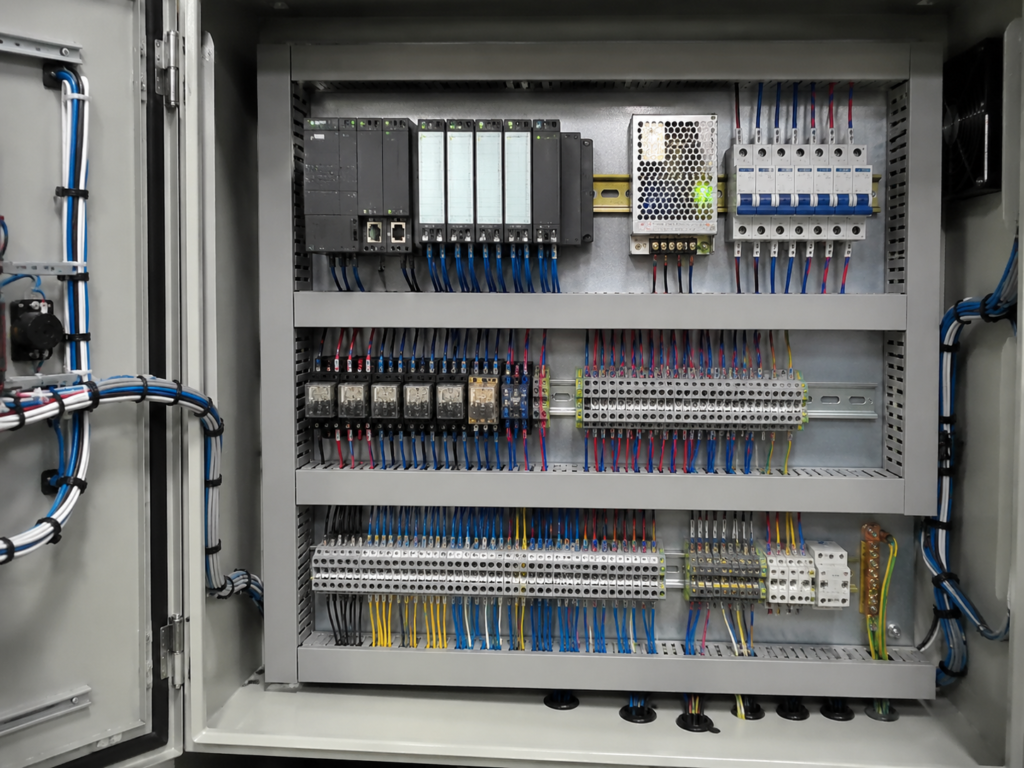
Introduction to Siemens PLC Automation
Siemens PLC Automation is one of the most reliable industrial automation solutions used in factories and production systems worldwide. Siemens PLC systems help industries automate machines, improve efficiency, reduce manual work, and increase production accuracy.
Modern industries prefer Siemens PLC Automation because of its high performance, scalability, and advanced communication features. From manufacturing plants to water treatment systems, Siemens PLC controllers are widely used in every automation sector.
What is a Siemens PLC?
A Siemens PLC is a programmable logic controller designed to automate industrial processes. It receives input signals from sensors, processes logic instructions, and controls outputs such as motors, valves, relays, and drives.
Key Functions of Siemens PLC Automation
Siemens PLC systems are known for stability and long operational life in harsh industrial environments.
Main Features of Siemens PLC Automation
1. High Reliability
Siemens PLC Automation systems are designed for continuous industrial operation with minimal downtime.
2. Fast Processing Speed
Modern Siemens PLC controllers process industrial logic quickly and accurately.
3. Modular Design
Users can expand Siemens PLC systems according to industrial requirements.
4. Easy Communication
Siemens PLC supports:
5. User-Friendly Programming
The TIA Portal software simplifies Siemens PLC programming and diagnostics.
Why Industries Choose Siemens PLC Automation
Industries trust Siemens PLC Automation because it provides:
Siemens automation products are widely used in modern Industry 4.0 systems.
Internal Link
External Resources
Suggested YouTube Video
Conclusion
Siemens PLC Automation is an essential technology for modern industries that require reliable, efficient, and scalable automation systems. From small machine control to advanced smart factories, Siemens PLC controllers provide excellent performance and industrial reliability.
Industries worldwide continue to adopt Siemens PLC Automation because it improves productivity, reduces operational costs, and supports advanced industrial communication technologies.
⭐ Advanced Optimization Techniques for Siemens PLC Systems
In modern industrial automation, continuous improvement is essential for achieving long-term performance and reliability. Simply installing a system is not enough; it must be regularly optimized and maintained to ensure maximum efficiency. Siemens PLC systems provide a strong foundation for industrial control, but their full potential is achieved only when they are properly configured and managed.
1. Smart Code Structuring
Well-structured PLC programming is critical for system stability and long-term scalability. Using modular programming techniques makes the logic easier to understand, troubleshoot, and modify. It also reduces the chances of human error and improves overall system reliability during complex operations.
2. Real-Time System Monitoring
Modern automation systems benefit greatly from real-time monitoring. This allows operators to continuously observe machine performance and detect any abnormal behavior instantly. Early detection of issues helps prevent downtime and improves production efficiency.
3. Secure Backup Management
Data protection is a key requirement in industrial environments. Regular backups of PLC programs, configurations, and system settings ensure quick recovery in case of failure. This reduces the risk of production loss and helps maintain smooth operations even during unexpected system errors.
4. Energy Optimization Strategies
Energy efficiency is becoming increasingly important in industrial systems. By implementing intelligent PLC logic, machines can be controlled more efficiently to avoid unnecessary operation. Techniques such as load balancing and idle-time reduction help lower energy consumption and operational costs.
5. Operator Training and Skill Development
Even the most advanced automation system depends on the skill level of its operators. Proper training ensures that the system is used correctly and efficiently. Skilled operators can quickly identify issues, perform troubleshooting, and maintain smooth production flow.
6. Predictive Maintenance Implementation
Instead of relying only on traditional maintenance methods, predictive maintenance uses real-time data and sensors to identify potential failures before they occur. This proactive approach reduces unexpected breakdowns and increases system reliability.
🚀 Final Technical Insight
Siemens PLC automation is not just about controlling machines; it is a complete industrial transformation solution. When proper programming practices, monitoring systems, and maintenance strategies are applied, production lines become more intelligent, efficient, and scalable.