
Table of Contents
TogglePLC Panel Wiring Techniques for Industrial Use
Introduction to PLC Panel Wiring Techniques
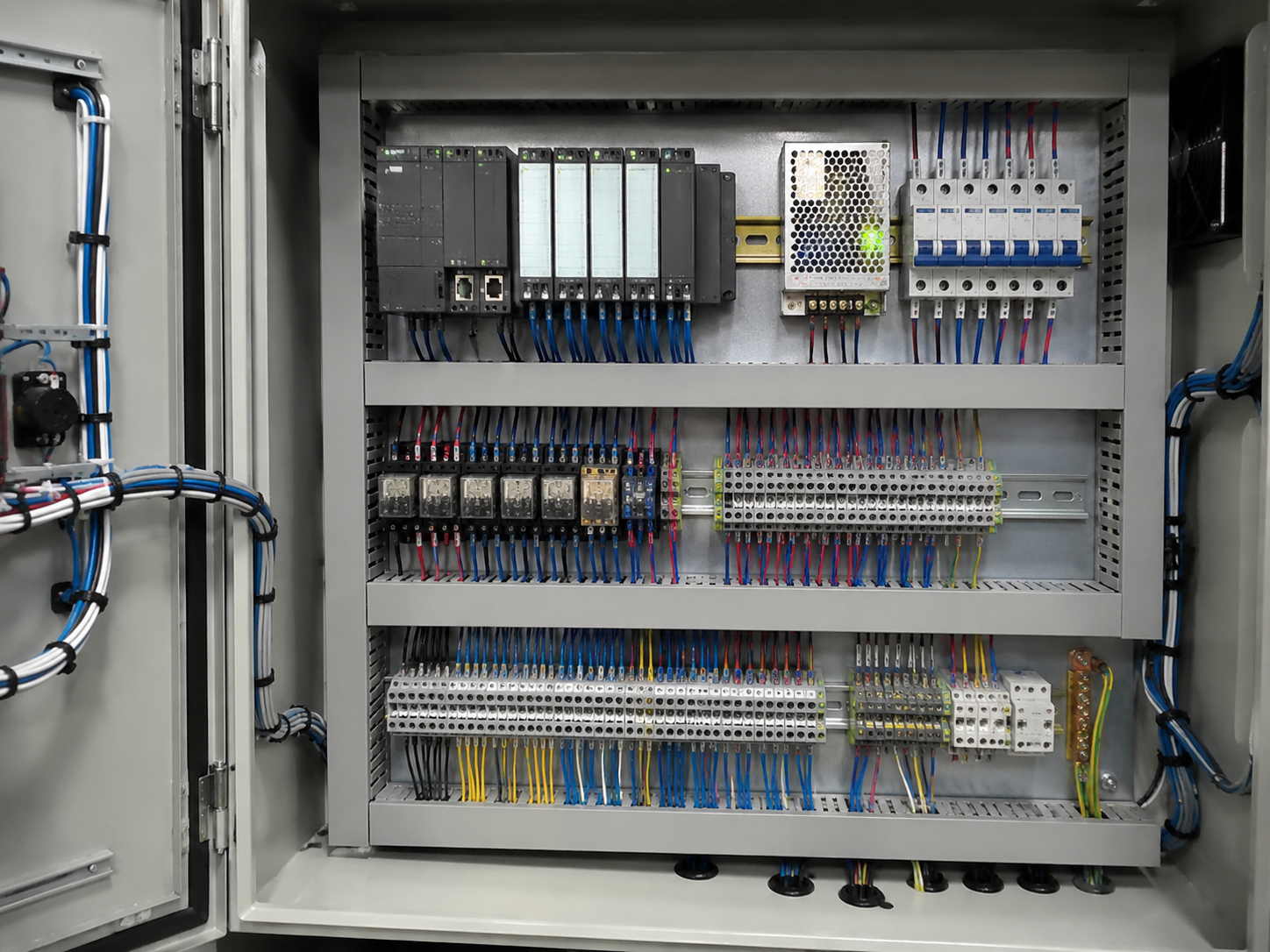
PLC Panel Wiring Techniques are essential in modern industrial automation systems. Industries use PLC control panels to automate machines, improve production efficiency, and reduce manual work. A properly wired PLC panel ensures stable machine operation, safety, and easy troubleshooting.
Industrial control panels contain several electrical components such as PLC modules, relays, circuit breakers, contactors, sensors, and power supplies. Proper wiring techniques help these components communicate efficiently without signal interference or electrical faults.
In this guide, you will learn professional PLC Panel Wiring Techniques used in industrial applications, including cable management, grounding, wire routing, safety standards, and troubleshooting methods.
What Is PLC Panel Wiring?
PLC panel wiring is the process of connecting all electrical and automation components inside a PLC control panel. The PLC receives signals from input devices and controls output devices according to programmed logic.
PLC Controller
The PLC CPU processes automation commands and controls industrial machines.
Input Devices
Input devices send signals to the PLC. Common examples include:
- Push buttons
- Sensors
- Limit switches
- Temperature transmitters
Output Devices
Output devices receive commands from the PLC, including:
- Motors
- Solenoid valves
- Indicator lights
- Relays
Terminal Blocks
Terminal blocks organize electrical connections inside the panel.
Importance of PLC Panel Wiring Techniques
Proper PLC Panel Wiring Techniques improve industrial automation performance and system reliability.
Improved Electrical Safety
Correct wiring reduces the risk of short circuits, overheating, and electrical failures.
Easy Maintenance
Neatly arranged wires and proper labeling make troubleshooting faster and easier.
Better Signal Quality
Proper cable routing prevents electrical noise and communication errors.
Reduced Downtime
Reliable PLC panel wiring minimizes unexpected machine shutdowns.
Professional Control Panel Design
Organized wiring improves airflow and gives the control panel a professional appearance.
Best PLC Panel Wiring Techniques
1. Use Proper Wire Labeling
Every wire inside the PLC panel should have a unique identification number. Wire labeling helps technicians identify circuits quickly during maintenance.
Benefits of Wire Labeling
- Faster troubleshooting
- Reduced wiring mistakes
- Easier future modifications
- Improved documentation
Industrial panels commonly use ferrules and cable markers for labeling.
2. Separate Power and Signal Cables
One of the most important PLC Panel Wiring Techniques is separating high-voltage power cables from low-voltage signal cables.
Why Cable Separation Matters
Power cables generate electromagnetic interference that can affect PLC communication and sensor signals.
Recommended Practice
- Use separate wire ducts
- Keep analog cables away from motor wiring
- Separate communication cables from AC power lines
This technique improves automation system stability.
3. Follow Proper Grounding Methods
Grounding protects industrial equipment from electrical faults and voltage surges.
Grounding Best Practices
- Use a dedicated earth terminal
- Keep grounding wires short
- Connect the control panel body to ground
- Avoid multiple grounding paths
Proper grounding reduces electrical noise and protects PLC components.
4. Organize Wires Using Cable Ducts
Cable ducts help maintain clean and organized PLC panels.
Advantages of Cable Ducts
- Better airflow
- Easy maintenance
- Improved safety
- Cleaner appearance
Avoid overcrowding wire ducts because excessive heat may damage cables.
5. Use Standard Wire Colors
Color coding improves wiring identification and electrical safety.
Common Industrial Wire Colors
- Red for AC control voltage
- Blue for DC control wiring
- Green or green-yellow for grounding
- Black for power circuits
Using standard colors makes maintenance easier for technicians.
6. Use Ferrules for Strong Connections
Ferrules provide secure wire termination and improve connection quality.
Benefits of Ferrules
- Improve electrical contact
- Reduce wire damage
- Increase panel reliability
Always use proper crimping tools for industrial wiring.
7. Maintain Proper Wire Routing
Professional PLC panels use clean wire routing techniques.
Good Wire Routing Practices
- Route wires horizontally and vertically
- Avoid tangled cables
- Leave service loops where required
- Use cable ties carefully
Organized wiring improves airflow and maintenance access.
8. Use Shielded Cables for Sensitive Signals
Sensitive analog signals require protection from electrical interference.
Applications of Shielded Cables
- Temperature sensors
- Analog transmitters
- Communication networks
- Encoder signals
Shielded cables improve signal stability and data accuracy.
9. Install Circuit Protection Devices
Industrial PLC panels require proper electrical protection.
Common Protection Devices
- Circuit breakers
- Overload relays
- Fuses
These devices protect equipment from short circuits and overload conditions.
10. Ensure Proper Panel Ventilation
Heat can reduce PLC performance and damage electronic components.
Ventilation Methods
- Cooling fans
- Air filters
- Ventilation openings
- Proper spacing between devices
Maintaining airflow increases equipment lifespan.
Common PLC Wiring Mistakes
Avoiding wiring mistakes improves system efficiency and reliability.
Poor Labeling
Unlabeled wires create confusion during troubleshooting.
Loose Connections
Loose terminals can cause overheating and machine failure.
Improper Grounding
Bad grounding creates electrical noise and communication issues.
Mixing Signal and Power Cables
Signal interference can affect PLC performance.
Overloaded Wire Ducts
Too many wires reduce airflow and increase maintenance difficulty.
PLC Panel Wiring Safety Tips
Safety is extremely important during industrial panel wiring.
Important Safety Practices
- Turn off power before wiring
- Use insulated tools
- Wear protective equipment
- Verify voltage before touching wires
- Follow electrical safety standards
Safe wiring practices protect both technicians and industrial equipment.
PLC Panel Wiring Techniques are used in many industries.
Manufacturing Industry
PLC panels automate assembly lines and robotic systems.
Control panels manage mixing, packaging, and conveyor systems.
Water Treatment Systems
PLC automation controls pumps, valves, and filtration systems.
Oil and Gas Industry
Industrial panels monitor pressure systems and process equipment.
Power Plants
PLC systems control turbines and power distribution equipment.
Future of PLC Panel Wiring
Modern automation systems continue to evolve rapidly.
Emerging Trends
- Smart industrial panels
- Industrial IoT integration
- Ethernet communication systems
- Remote monitoring technologies
- Modular PLC panel designs