
Table of Contents
TogglePowerful PLC Panel Wiring Guide for Smart Industrial Automation
PLC Panel Wiring
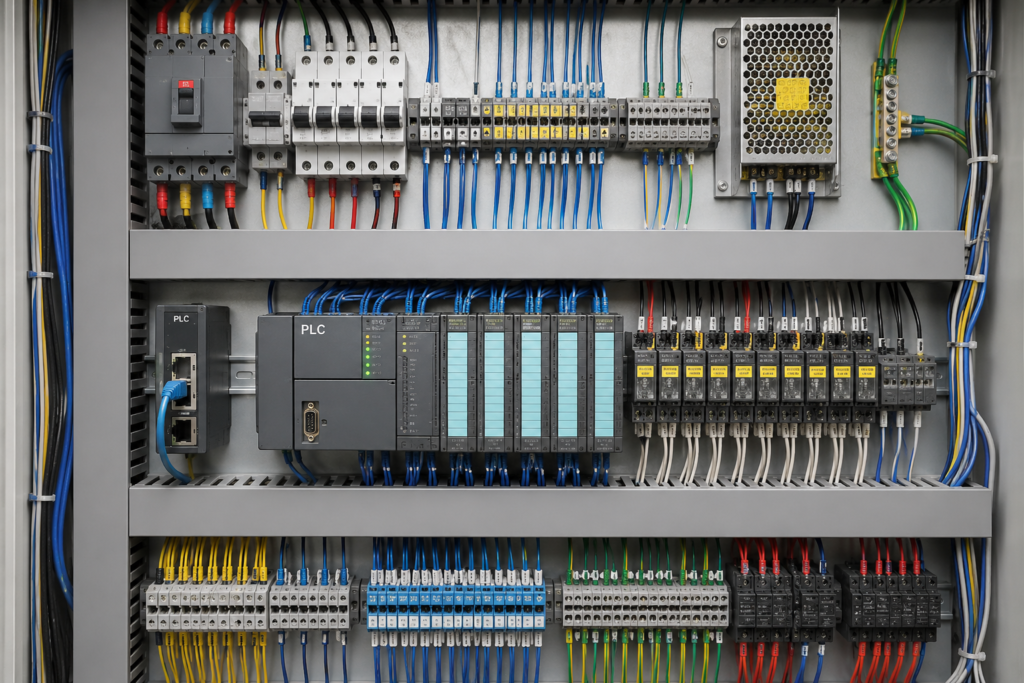
PLC Panel Wiring is one of the most important parts of industrial automation systems. A properly designed PLC panel improves machine performance, increases safety, and reduces maintenance problems. Modern factories use PLC panels to control motors, sensors, conveyors, pumps, and complete production lines efficiently.
In this guide, you will learn about PLC Panel Wiring, major components, wiring methods, safety practices, troubleshooting tips, and industrial applications. This article is beginner-friendly and optimized for SEO.
What is PLC Panel Wiring?
PLC Panel Wiring refers to the electrical wiring process used inside a PLC control panel. It connects PLC modules, relays, breakers, contactors, power supplies, sensors, and field devices together.
A PLC panel acts as the brain of an automation system. It receives input signals from sensors and sends output signals to motors or machines.
Proper PLC Panel Wiring ensures:
- Stable operation
- Better automation control
- Safe electrical distribution
- Easy troubleshooting
- Long equipment life
Industrial automation companies use professional PLC Panel Wiring methods to maintain reliability and safety standards.
Main Components of a PLC Panel
A standard PLC panel contains several important electrical components.
1. PLC Controller
The PLC controller processes input and output signals. It controls industrial machines automatically.
2. MCB and Circuit Breakers
MCBs protect the panel from overloads and short circuits.
3. Power Supply
The power supply converts AC voltage into stable DC voltage for PLC operation.
4. Contactors
Contactors are used for switching motors and heavy electrical loads.
5. Relays
Relays isolate control circuits and improve protection.
6. Terminal Blocks
Terminal blocks organize field wiring connections neatly.
7. Cooling Fans
Cooling fans maintain safe panel temperature during operation.
Importance of PLC Panel Wiring
PLC Panel Wiring plays a major role in industrial productivity and electrical safety.
Improved Automation
Correct wiring helps machines work accurately with minimum downtime.
Better Safety
Professional PLC Panel Wiring reduces electrical hazards and protects equipment.
Easy Maintenance
Organized wiring makes troubleshooting faster and easier.
Long-Term Reliability
High-quality wiring increases system durability and minimizes failures.
Step-by-Step PLC Panel Wiring Process
Step 1: Panel Layout Design
First, engineers create a panel layout for component placement.
Good spacing improves cooling and maintenance access.
Step 2: DIN Rail Installation
DIN rails are installed inside the panel to mount PLC modules and electrical devices.
Step 3: Mount Electrical Components
Install:
- PLC modules
- Relays
- Contactors
- MCBs
- Power supplies
- Terminal blocks
Step 4: Wire Routing
Use wire ducts for clean cable management.
Keep power cables separate from signal cables to reduce electrical noise.
Step 5: Ferruling and Labeling
Every wire should have ferrules and labels for easy identification.
Step 6: Power Connections
Connect AC and DC power carefully according to the electrical diagram.
Step 7: Input and Output Wiring
Connect sensors to PLC inputs and actuators to PLC outputs.
Step 8: Testing
Perform continuity testing, insulation testing, and power-on testing before operation.
Safety Tips for PLC Panel Wiring
Safety is extremely important during PLC Panel Wiring.
Turn Off Main Power
Always disconnect power before wiring work.
Use Proper Cable Size
Correct cable sizing prevents overheating.
Follow Electrical Standards
Use industrial wiring standards for safe installation.
Grounding and Earthing
Use industrial wiring standards for safe installation.
Use Wire Markers
Use industrial wiring standards for safe installationWire markers simplify troubleshooting and maintenance..
Common PLC Panel Wiring Mistakes
Avoiding common mistakes improves system performance.
Poor Cable Management
Messy wiring creates maintenance difficulties.
Loose Connections
Loose terminals can cause overheating and system failure.
Incorrect Power Supply
Wrong voltage damages PLC modules.
Missing Labels
Unlabeled wires increase troubleshooting time.
No Ventilation
Poor airflow causes panel overheating.
Benefits of Professional PLC Panel Wiring
Professional PLC Panel Wiring provides many industrial advantages.
Reduced Downtime
Well-organized panels reduce machine breakdowns.
Higher Efficiency
Automation systems operate smoothly and accurately.
Faster Troubleshooting
Technicians can quickly identify faults.
Better Appearance
Clean panel wiring improves professional presentation.
Future Expansion
Organized panels allow easy system upgrades.
PLC Panel Wiring Applications
PLC Panel Wiring is used in many industries worldwide.
Manufacturing Plants
Industrial machines use PLC panels for automatic production control.
Water Treatment Systems
PLC systems monitor pumps and valves.
Food Processing Industry
Automation improves hygiene and production efficiency.
Packaging Machines
PLC Panel Wiring controls conveyor systems and packaging operations.
Power Plants
Industrial automation systems manage electrical distribution and monitoring.
Maintenance and Troubleshooting
Regular maintenance improves PLC panel reliability.
Check Wire Tightness
Inspect terminals regularly for loose connections.
Clean the Panel
Dust and dirt affect electrical performance.
Monitor Temperature
High temperature damages components.
Inspect Cooling Fans
Faulty fans reduce airflow inside the panel.
Use Diagnostic Tools
PLC software helps identify faults quickly.
Recommended External Resources
These are DoFollow-style external references for industrial automation learning.
Conclusion
PLC Panel Wiring is a critical part of modern industrial automation systems. Proper wiring improves safety, reliability, and machine performance. A professionally wired PLC panel helps industries reduce downtime, improve efficiency, and simplify maintenance.
By following proper PLC Panel Wiring practices, industries can build safe and efficient automation systems for long-term operation. Whether you are a beginner or an experienced technician, understanding PLC Panel Wiring fundamentals is essential for successful industrial automation projects.
Final Summary & Practical Insight
PLC Panel Wiring is a core foundation of industrial automation systems. A well-structured wiring setup ensures stable communication between all electrical components and improves overall system reliability. Proper installation and maintenance reduce the chances of faults and increase production efficiency.
In modern automation industries, correct PLC Panel Wiring helps engineers achieve better control, faster troubleshooting, and long-term system stability. Following standard safety practices and organized wiring layouts is essential for smooth industrial operations.
Why It Matters
A properly wired PLC panel ensures:
- Safe and stable machine operation
- Reduced downtime in production systems
- Easy fault detection and repair
- Long-term system durability