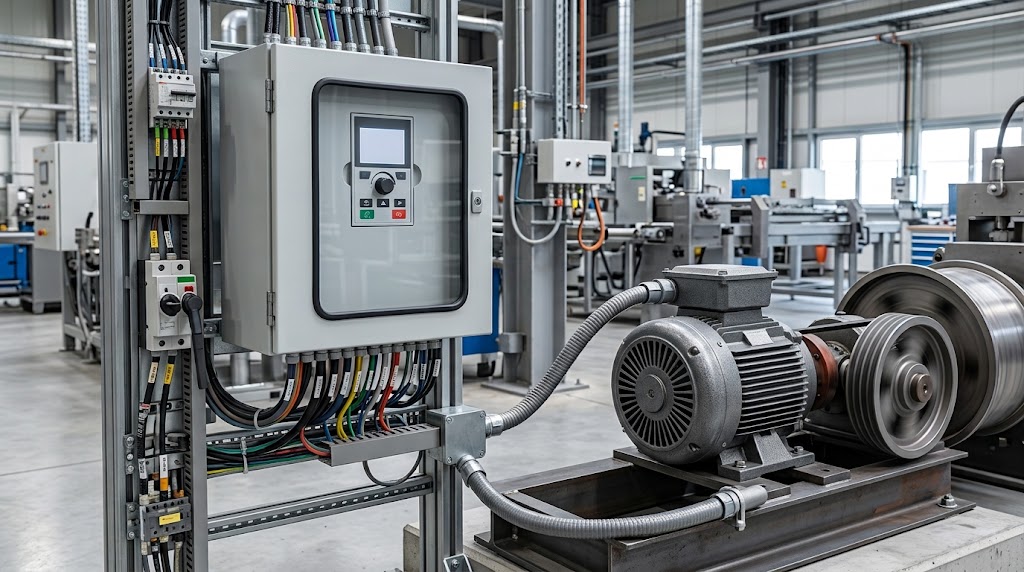
Variable Frequency Drives (VFDs) provide a practical way to control the speed of AC motors in industrial applications. Instead of running a motor at one fixed speed, a VFD speed control system adjusts the motor's operating frequency to achieve the required speed.
This approach gives operators better control over motor performance while also helping equipment operate according to the actual process requirements.
What Is VFD Speed Control?
VFD speed control is the process of adjusting an AC motor's speed by changing the frequency supplied to the motor. The VFD receives electrical power, converts it internally, and then provides controlled output power to the motor.
As the output frequency changes, the motor's rotational speed changes accordingly. Therefore, operators can increase or decrease motor speed without relying only on mechanical methods.
How Does Frequency Control Motor Speed?
The relationship between frequency and motor speed is one of the most important principles behind VFD operation.
For an AC induction motor, motor speed is closely related to the supplied frequency. When the frequency increases, the motor generally runs faster. Likewise, reducing the frequency causes the motor to operate at a lower speed.
However, the actual motor speed is slightly lower than the calculated synchronous speed because of motor slip. For this reason, the VFD must be configured according to the motor's characteristics and operating requirements.
Why Is VFD Speed Control Important?
In many industrial processes, a motor does not need to operate at full speed all the time. For example, pumps, fans, conveyors, and other rotating equipment may require different speeds during different stages of operation.
With VFD speed control, the motor can operate closer to the speed required by the process. As a result, the system can achieve smoother operation and better process control.
Moreover, controlled acceleration and deceleration can reduce sudden mechanical stress on connected equipment. This makes VFDs useful where smooth and adjustable motor operation is required.
Understanding the Speed and Frequency Relationship
The required motor speed depends on the frequency supplied by the VFD. For a standard induction motor, increasing the frequency generally increases RPM, while lowering the frequency reduces RPM.
For example, a motor designed to operate around 1,500 RPM at 50 Hz will normally run at a lower speed when the frequency is reduced. The exact RPM can vary because of motor slip and the motor's design.
Therefore, frequency should always be adjusted within the operating range recommended for the motor.
Common Applications of VFD Speed Control
VFD speed control is used in many industrial machines where variable motor speed is needed. Pumps can operate at different speeds according to flow requirements, while fans can adjust their output according to ventilation demand.
Similarly, conveyors can use controlled speeds for different production stages. VFDs are also commonly used with compressors, mixers, and other rotating equipment where precise speed adjustment can improve process control.
Important VFD Speed Settings
Several settings affect how a motor responds to speed commands. The minimum and maximum frequency limits define the usable operating range, while the reference source determines how the desired speed is entered.
Depending on the application, speed can be controlled through a keypad, analog signal, digital control, or an automation system such as a PLC.
These settings should match the motor nameplate information and the requirements of the connected equipment. Incorrect limits can cause unsuitable operating speeds or unexpected machine behavior.
Benefits of Controlled Motor Speed
Adjustable motor speed can provide better control over industrial processes. Instead of operating equipment continuously at one speed, the motor can be matched more closely to changing production requirements.
Furthermore, smooth speed changes can help reduce mechanical shocks during operation. In applications such as pumping and ventilation, reducing unnecessary motor speed can also lower energy consumption.
However, the actual energy savings depend on the type of load, operating conditions, and overall system design.
Key Considerations for Reliable Operation
Before using VFD speed control, verify the motor's rated voltage, current, frequency, and base speed. The VFD parameters should then be configured according to these values.
It is also important to avoid operating the motor outside its suitable speed range. Some machines have mechanical or process limitations that must be considered before changing the operating frequency.
For reliable performance, speed settings should therefore be selected according to both the motor specifications and the application requirements.
Choosing the Right Speed Control Method
Different machines require different levels of speed control. A simple application may only need a basic frequency reference, while a production machine may need frequent and precise speed changes.
For basic VFD speed control, operators can use the drive keypad. For remote operation, an analog signal or digital command can provide the required speed reference. Industrial automation systems can also send speed commands directly to the VFD.
VFD Speed Control and Process Performance
Correct speed control can improve how a machine responds to changing production demands. For example, a conveyor may need different speeds during loading and unloading, while a pump may need to adjust its operation as process conditions change.
As a result, the motor does not have to run at one fixed speed throughout the entire process. This flexibility can help maintain more consistent machine operation.
When to Use Variable Motor Speed
Variable speed control works particularly well when equipment has changing operating requirements. Pumps, fans, conveyors, mixers, and similar machines can benefit when their speed needs to change during operation.
However, some machines require a fixed operating speed because of their mechanical design or process requirements. In such cases, variable speed control may provide little practical benefit.
Monitoring VFD Speed Control
Operators should monitor important operating values while the motor runs. Frequency, output current, motor speed, and load conditions can provide useful information about system performance.
Regular monitoring also helps identify unusual operating conditions before they affect production. If the motor draws excessive current at a particular speed, the application and VFD settings should be checked.
Improving Control with External Speed References
Many industrial systems need operators to change motor speed without accessing the VFD keypad. An external speed reference makes this possible and gives the control system more flexibility.
A PLC, potentiometer, or analog signal can provide the desired speed command. The VFD then adjusts its output according to that command. This setup works well when the motor forms part of an automated production process.
Preset Speeds for Repeated Operations
Some machines need only a few specific operating speeds. In these applications, preset speed functions can simplify VFD speed control.
The operator or control system can select a predefined speed for each stage of the process. This approach reduces manual adjustments and helps maintain consistent machine operation.
Maintaining Stable Motor Operation
Rapid speed changes can affect the mechanical system, especially when the connected equipment has significant inertia. A suitable speed command helps the motor respond smoothly without unnecessary fluctuations.
Operators should also consider the machine's load when selecting operating speeds. A speed that works well under one load condition may not provide the same results under another.
Speed Control in Automated Systems
VFD speed control becomes more useful when the drive communicates with a PLC or other automation controller. The controller can adjust motor speed according to process conditions, sensor readings, or production requirements.
This allows the motor to respond automatically instead of relying on continuous manual adjustment. Consequently, operators can focus more on overall process monitoring.
Practical Checks Before Changing Speed
Before increasing or reducing motor speed, check whether the connected machine can safely operate at the new RPM. Belts, pumps, fans, gearboxes, and other mechanical components may have specific speed limits.
Also check the motor current during operation. If the current rises significantly at a particular speed, investigate the load and drive configuration before continuing.
These simple checks help maintain reliable VFD speed control and reduce avoidable operating problems.
VFD Speed Control for Different Load Types
The type of load plays an important role when engineers select a motor speed. Different machines respond differently when their operating speed changes.
For example, centrifugal fans and pumps often require less power when their speed decreases. On the other hand, conveyors and certain production machines may maintain a more consistent load across their operating range.
Understanding the load type helps engineers choose suitable VFD speed control settings for the application.
Controlling Speed Without Affecting Process Quality
Motor speed should always support the required production process. Increasing speed may increase output, but excessive speed can also affect product quality, machine stability, or connected equipment.
For this reason, operators should define practical minimum and maximum speeds instead of allowing unrestricted adjustments. A controlled operating range keeps the machine within its intended working conditions.
Using Feedback for Better Speed Control
Some applications need more accurate speed regulation than a basic speed command can provide. In these systems, feedback from an encoder or another suitable sensor can help the control system monitor actual motor speed during operation. The system can continuously compare the requested speed with the motor's actual performance and identify differences that may affect the process.
The VFD or automation controller can compare the desired speed with the measured speed and make adjustments when necessary. This approach can improve speed accuracy in applications that demand tighter control, such as machines that require consistent rotational speed during production. Feedback can also help the control system respond more effectively when the motor load changes during operation.
Matching Speed Control With Production Demands
Production requirements can change throughout the day, so a single motor speed may not always suit every stage of a process. A machine may need a low speed during setup, a moderate speed during normal operation, and a higher speed during peak production. Using suitable speed references allows operators to adapt motor operation according to these changing requirements.
A properly planned VFD speed control strategy allows these changes without requiring constant manual intervention. Operators can define suitable speed references for each stage and adjust them when process requirements change. This can make the overall operation more flexible while keeping the motor within the intended operating range. In automated systems, the controller can also change the speed reference according to process conditions.
Avoiding Unnecessary Speed Changes
Frequent speed adjustments do not always improve performance. If the process does not require variable speed, unnecessary changes can add complexity without providing a useful benefit. Constantly changing the motor speed can also make the control strategy harder to manage, particularly in systems with several connected machines.
Therefore, engineers should identify the actual process requirement before introducing multiple speed levels or automatic speed commands. Simple control often works better when the application has limited speed requirements. A clearly defined speed range can make operation easier to monitor and reduce unnecessary adjustments during production.
Final Practical Check
Before commissioning a VFD speed control system, verify the motor data, machine speed limits, control method, and required operating range. Then test the system under realistic load conditions rather than checking performance only under light-load conditions. This helps confirm that the selected settings suit the actual application.
During commissioning, observe motor current, actual speed, acceleration response, and overall machine behavior. These checks help confirm that the selected speed range works correctly for the complete system. If the machine behaves differently at certain speeds, review the relevant settings and operating conditions before putting the system into regular service.
A well-planned approach allows the VFD to provide useful speed adjustment while keeping the motor and connected equipment within suitable operating conditions. It also gives operators a clearer understanding of how the motor should respond to different production requirements, helping maintain consistent and controlled operation.
Managing Speed Changes in Real Industrial Conditions
Industrial machines rarely operate under exactly the same conditions throughout an entire production cycle. Material quantity, process demand, and mechanical load can change while the motor continues running. Because of this, a practical VFD speed control strategy should consider how the machine behaves during real operation rather than focusing only on a selected frequency value.
When the load changes, the motor may require different torque to maintain its required performance. Operators should therefore observe how the motor responds at different speeds and loads during commissioning. This information can help engineers establish operating limits that suit the actual machine. A carefully selected range also prevents operators from making unnecessary speed changes simply to compensate for normal process variations.
Understanding Torque During Speed Control
Speed and torque work together in motor applications, so engineers should consider both when selecting operating conditions. A motor may maintain its required speed under a light load but respond differently when the load increases. The VFD must provide suitable output to support the motor while it handles these changing conditions.
For constant-torque applications, the motor may need similar torque across a broad speed range. Conveyors, mixers, and some material-handling machines can fall into this category. Other applications, such as centrifugal pumps and fans, behave differently because their load characteristics change significantly with speed. Understanding this difference helps engineers select appropriate VFD speed control parameters for each application instead of applying the same settings to every machine.
Operating Above the Motor's Base Frequency
Some applications require speeds above the motor's rated or base frequency. A VFD can increase output frequency within its configured range, but the motor does not continue producing the same torque indefinitely as frequency rises above its base value.
At higher frequencies, the available torque can decrease depending on the motor and drive characteristics. Therefore, engineers should check the motor manufacturer's specifications before using an extended speed range. Mechanical components also require attention because bearings, couplings, fans, and rotating assemblies may have maximum permitted speeds.
This makes high-speed operation an application-specific decision rather than a simple matter of increasing the frequency. Proper evaluation helps prevent operating the motor or connected machinery outside suitable mechanical and electrical limits.
Low-Speed Operation and Motor Cooling
Low-speed operation can create a different concern because many standard motors rely on their own shaft-mounted fan for cooling. When the motor rotates slowly, that fan also moves less air. As a result, the motor may not dissipate heat as effectively during prolonged low-speed operation.
The actual effect depends on the motor design, load, operating duration, and cooling arrangement. Applications that require continuous operation at low speed may therefore need a motor with an independent cooling system or another suitable thermal solution.
Engineers should check the motor's permissible speed range and thermal requirements before selecting long-duration low-speed operation. This consideration becomes particularly important when the machine operates under significant load.
Coordinating Multiple Motors
Some industrial machines use several motors that need coordinated speed control. A conveyor line, for example, may use multiple drives where each motor contributes to the same material-handling process. If one motor runs at an unsuitable speed, the entire system can experience uneven movement or unnecessary mechanical stress.
In these applications, the control system should define how each drive responds to the process. One VFD may act as the primary speed reference while other drives follow a coordinated command. Engineers can also use feedback signals when the application requires closer synchronization between motors.
Proper coordination allows multiple motors to work together instead of operating as independent units. This can improve process consistency and reduce problems caused by mismatched operating speeds.
Selecting Speed Limits for Safe Operation
Every machine has practical operating boundaries. These limits may come from the motor, gearbox, bearings, belts, pumps, fans, or the production process itself. Therefore, engineers should establish minimum and maximum speed values before operators begin normal operation.
A suitable speed limit prevents accidental commands from pushing the equipment beyond its intended range. It also gives operators a clear operating window when they need to adjust production speed.
For automated systems, these limits become even more important because a PLC or control system can send speed commands without direct operator input. Defining appropriate limits within the VFD and control system provides an additional layer of operational control.
Testing Speed Control Before Full Production
A new VFD speed control setup should go through controlled testing before the machine enters full production. Start with a suitable low or moderate speed and observe the motor, load, current, and machine response. Then increase the speed gradually while checking whether the equipment behaves as expected.
Testing at different load conditions can reveal issues that may not appear during an unloaded test. Engineers can use these observations to refine the operating range and control parameters before normal production begins.
A structured commissioning process also creates a useful reference for future maintenance. Recording important operating values gives technicians a baseline that they can compare against if the machine develops unusual behavior later.
Practical Approach to Reliable VFD Speed Control
Reliable speed control depends on more than changing the frequency command. Engineers need to consider motor characteristics, load behavior, cooling requirements, mechanical limits, feedback needs, and the overall production process.
When these factors work together, the VFD can provide controlled motor operation across the required working range. The goal should always remain practical: select a suitable speed range, configure the drive according to the application, and verify performance under real operating conditions.
This approach helps industrial teams use VFD speed control effectively while maintaining predictable machine behavior and supporting dependable production.
Frequently Asked Questions
What is VFD speed control?
VFD speed control is a method of adjusting an AC motor’s operating speed by changing the frequency supplied to the motor. A variable frequency drive can increase or decrease motor speed according to the requirements of the application. This allows equipment to operate at a suitable speed instead of running continuously at a fixed speed.
How does frequency affect motor speed?
Motor speed is closely related to the frequency supplied by the VFD. When the output frequency increases, the motor generally runs faster, while reducing the frequency lowers its operating speed. The actual motor speed can differ slightly from the calculated synchronous speed because of motor slip and the load connected to the motor.
Can a VFD control motor speed automatically?
Yes. A VFD can receive speed commands from different control sources, including a keypad, potentiometer, analog signal, PLC, or automation controller. In an automated system, the controller can send changing speed references based on production requirements, process conditions, or feedback from sensors.
What are the main benefits of VFD speed control?
VFD speed control provides flexible motor operation and allows equipment to match its speed with the actual process requirement. It can also provide smoother acceleration and deceleration, better process control, and reduced mechanical stress. For suitable variable-load applications such as pumps and fans, operating at lower speeds can also reduce energy consumption.
Is low-speed motor operation safe?
Low-speed operation can be safe when the motor and application are designed for the required operating range. However, some motors use a shaft-mounted cooling fan, which provides less cooling as motor speed decreases. Therefore, continuous operation at very low speed may require additional thermal consideration or an independent cooling arrangement.
Can a VFD run a motor above its base frequency?
A VFD may operate a motor above its base frequency when the motor and machine are designed for it. However, increasing frequency beyond the motor’s base frequency can reduce available torque, while the mechanical components may also have maximum speed limits. The motor manufacturer and equipment specifications should therefore be checked before using higher frequencies.
Why does motor current matter during speed control?
Motor current provides useful information about the load placed on the motor. If current becomes unusually high at a particular speed, the motor may be dealing with excessive mechanical load, incorrect settings, or an application-related problem. Monitoring current during commissioning and normal operation can help identify issues before they become more serious.
Does every motor need variable speed control?
No. Variable speed control is useful when the application requires different operating speeds, but some machines are designed to run at a fixed speed. Adding a VFD should have a clear operational purpose. The motor, driven equipment, process requirements, and control method should all be considered before selecting variable speed operation.
Conclusion
VFD speed control provides a practical way to adjust AC motor operation according to changing industrial requirements. By controlling the frequency supplied to the motor, a VFD can provide controlled acceleration, adjustable operating speed, and smoother changes between different production conditions. This flexibility makes variable frequency drives useful across applications such as pumps, fans, conveyors, mixers, compressors, and other motor-driven equipment.
However, effective speed control involves more than simply changing the frequency. Motor nameplate information, minimum and maximum speed limits, torque requirements, cooling performance, mechanical restrictions, and the selected speed reference should all be considered before commissioning. These factors help ensure that the motor operates within a suitable range while the connected equipment continues to perform as expected.
For automated applications, VFD speed control can also work with PLCs, sensors, and feedback systems to provide more consistent process operation. When the correct settings and operating limits are established, the VFD can respond to changing production demands without requiring constant manual adjustment. Regular monitoring of motor current, speed, load behavior, and operating conditions can further support reliable performance.
Ultimately, the right VFD speed control strategy depends on the motor, driven machine, process requirements, and operating environment. A properly selected and configured VFD can provide precise speed adjustment while supporting efficient, stable, and reliable motor operation in industrial systems.