
Table of Contents
ToggleIntroduction
The Device Not Reachable TIA Portal error is one of the most common communication problems that automation engineers face while working with Siemens PLCs. This error appears when the software cannot establish a connection with the target PLC or automation device. As a result, users cannot download programs, upload project data, or perform online diagnostics.
Although this issue may seem frustrating at first, it is usually caused by simple configuration mistakes. In many cases, checking the network settings, verifying the IP address, or selecting the correct communication interface solves the problem. Understanding the possible causes can save valuable time and reduce downtime during commissioning or maintenance.
This guide explains the common reasons behind the Device Not Reachable TIA Portal error and provides practical solutions that you can apply step by step.
What Is the Device Not Reachable Error?
The Device Not Reachable error appears when Siemens TIA Portal cannot communicate with the PLC through the selected communication path. The software searches for the controller but does not receive a response from the device.
This problem may occur during project download, online monitoring, hardware detection, or PLC diagnostics. It can affect both new and existing automation projects.
Fortunately, most communication failures are related to network configuration instead of hardware failure.
Common Causes of the Device Not Reachable Error
Several factors can trigger this communication issue. Identifying the correct cause is the first step toward solving the problem.
Incorrect IP Address
A wrong IP address is one of the most frequent reasons for connection failure. If the PLC and the programming computer are on different network ranges, TIA Portal cannot locate the device.
Always verify that both devices use compatible IP settings before attempting a connection.
Wrong PG/PC Interface
TIA Portal uses a communication interface to connect with Siemens devices. If the wrong Ethernet adapter or communication driver is selected, the software cannot reach the PLC.
Selecting the correct interface often fixes the problem immediately.
Ethernet Cable Problems
A damaged Ethernet cable or a loose connection may interrupt communication between the engineering station and the PLC.
Inspect the cable carefully and reconnect both ends before troubleshooting software settings.
Firewall or Antivirus Restrictions
Some firewall or antivirus programs block industrial communication protocols.
If the connection suddenly stops after a security update, temporarily disable the firewall for testing or create an exception for TIA Portal.
PLC Power Issue
A powered-off PLC cannot respond to communication requests.
Check that the controller is powered correctly and that the status LEDs indicate normal operation.
How to Fix Device Not Reachable TIA Portal
Follow these troubleshooting steps in order. Most users can solve the issue without replacing hardware.
Step 1: Verify the PLC IP Address
Open your project and compare the configured PLC IP address with the actual device settings.
If the addresses do not match, update the configuration or assign the correct IP address using Siemens tools.
Step 2: Check Your Computer's Network Adapter
Open the network settings on your computer.
Confirm that the Ethernet adapter connected to the PLC has an IP address within the same subnet.
For example:
- PLC: 192.168.0.1
- Computer: 192.168.0.10
- Subnet Mask: 255.255.255.0
Matching network settings allow both devices to communicate successfully.
Step 3: Select the Correct PG/PC Interface
Inside Siemens TIA Portal, open the communication settings and verify that the correct Ethernet adapter is selected.
Many computers have multiple network adapters. Choosing the wrong one prevents communication even when all other settings are correct.
After selecting the correct interface, search for accessible devices again.
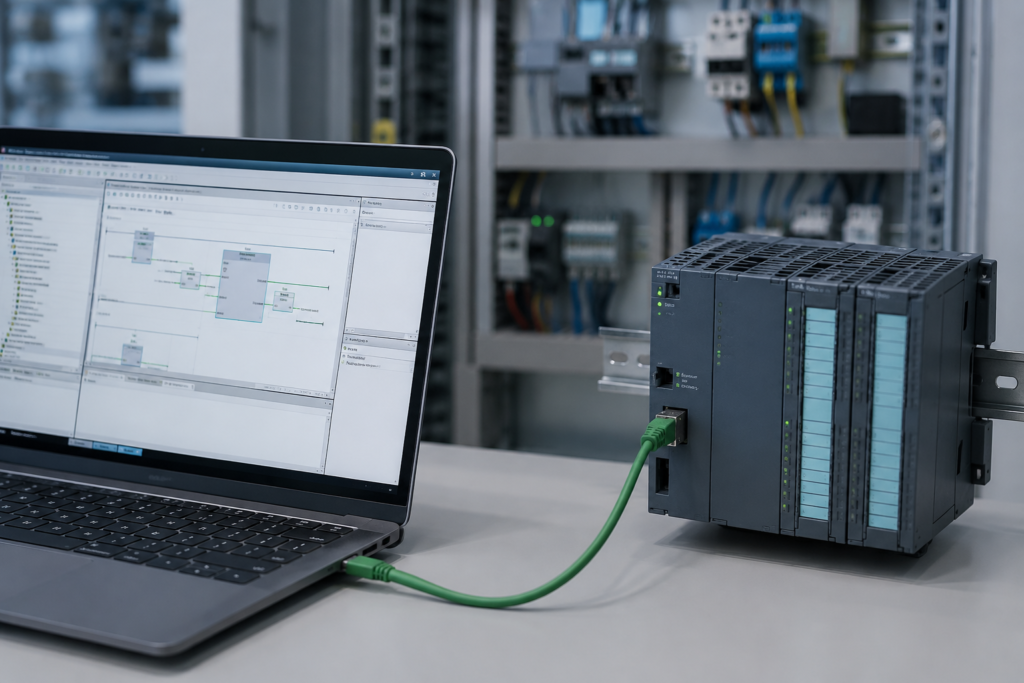
Step 4: Test the Physical Connection
Inspect the Ethernet cable carefully.
Replace the cable if necessary and verify that the Ethernet port LEDs on both the PLC and computer are active.
A simple cable replacement often resolves unexpected communication failures.
More Ways to Fix Device Not Reachable TIA Portal
Sometimes the problem continues after checking the basic settings. However, you can still solve it by following a few extra steps. These methods often help when the issue is caused by software configuration or network communication.
Restart the PLC and Computer for Device Not Reachable TIA Portal
First, save your project. Next, restart both the PLC and your computer. A fresh restart clears temporary communication problems. After that, open TIA Portal again and search for the device.
This simple step often restores the connection without changing any settings.
Update the Device Configuration
If the hardware configuration does not match the actual PLC, communication may fail. Therefore, compare the device configuration with the installed hardware.
Make sure the CPU model, communication modules, and firmware version are correct. Then compile the project again before downloading it.
Check Firmware Compatibility
Firmware compatibility is another important factor. If your PLC firmware is newer than the version supported by your project, communication problems may appear.
Therefore, verify that your TIA Portal version supports the installed firmware. If required, update the project or use a compatible software version.
Scan Accessible Devices
Open Accessible Devices and start a scan. If the PLC appears in the list, compare its IP address with your project settings. Then update the project if needed.
This feature helps identify incorrect network settings quickly.
How to Prevent Device Not Reachable TIA Portal
Preventing communication problems is easier than fixing them. Therefore, follow these simple practices during every project.
Use Correct Network Settings
Always keep the PLC and engineering computer on the same subnet. In addition, avoid duplicate IP addresses on the network.
Clear network planning reduces future communication errors.
Save Project Backups
Create regular project backups before making major changes. As a result, you can restore your work if a configuration problem occurs.
Backups also reduce downtime during maintenance.
Keep Software Updated
Use an updated version of TIA Portal whenever possible. Moreover, install official updates after testing them in your environment.
Software updates often improve communication stability and fix known issues.
Inspect Network Hardware
Check Ethernet cables, switches, and connectors regularly. Even a small hardware problem can interrupt communication.
Replacing a damaged cable is faster than spending hours troubleshooting software.
Following a few good habits can improve system reliability.
- Verify IP addresses before downloading a project.
- Label network cables clearly.
- Use quality Ethernet cables for industrial environments.
- Keep project documentation updated.
- Test communication before starting production.
- Save backup copies after every major change.
- Compile the project before downloading it.
- Check diagnostic messages if communication fails.