
Table of Contents
ToggleSiemens S7-800 PLC: A Complete Beginner's Guide
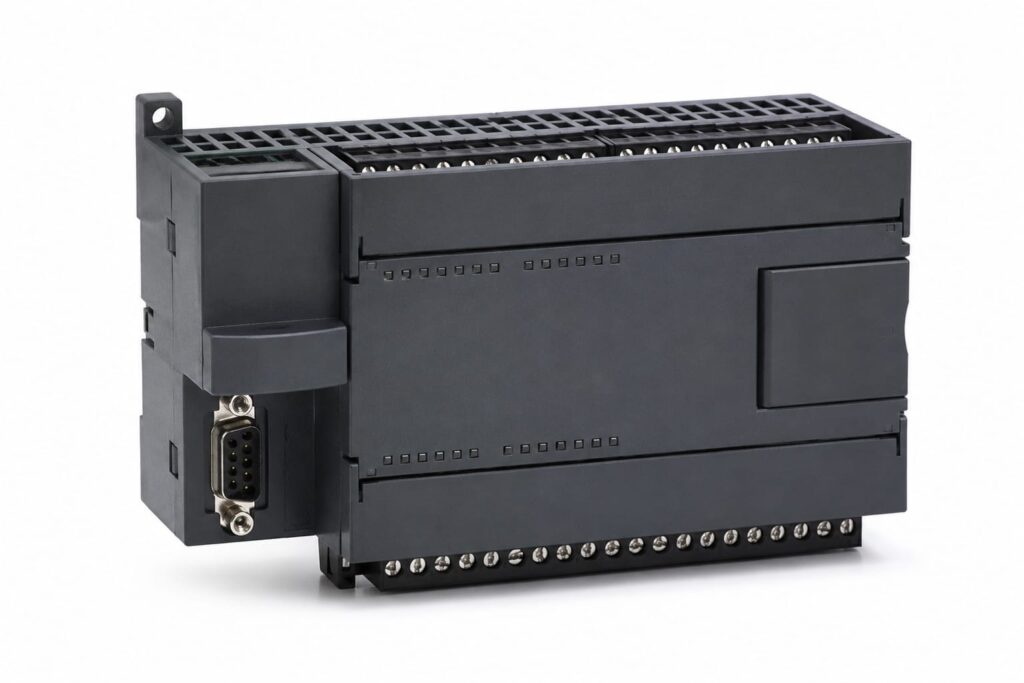
The Siemens S7-800 PLC is a powerful automation controller used in modern industries. The Siemens S7-800 PLC helps control machines, production lines, and industrial processes with speed and accuracy. Moreover, it improves efficiency and reduces manual work. Today, many factories rely on the Siemens S7-800 PLC to achieve better performance and consistent results. Therefore, learning about this controller is important for anyone interested in industrial automation.
What Is a Siemens S7-800 PLC?
A Siemens S7-800 PLC is a programmable logic controller. It receives signals from sensors and switches. Then, it processes those signals and controls different outputs. As a result, machines work automatically and accurately.
Today, automation plays a major role in modern industries. Therefore, PLC systems have become essential for manufacturing and process control.
Key Features of Siemens S7-800 PLC
The Siemens S7-800 PLC includes several useful features.
- Compact design
- Fast processing speed
- Flexible communication options
- Reliable industrial performance
- Easy maintenance
- Scalable system architecture
Moreover, the controller can operate in demanding industrial environments. This makes it suitable for many automation projects.
Main Components of Siemens S7-800 PLC
Understanding the main components is important before programming a Siemens S7-800 PLC.
CPU
The CPU acts as the brain of the system. It executes the control program and manages all operations.
Input Modules
Input modules receive signals from field devices.
Examples include:
- Push buttons
- Sensors
- Limit switches
- Temperature devices
Output Modules
Output modules send commands to industrial equipment.
Examples include:
- Motors
- Relays
- Contactors
- Solenoid valves
Power Supply
The power supply provides stable electrical power. Therefore, the PLC can operate continuously.
How Siemens S7-800 PLC Works
The Siemens S7-800 PLC follows a simple operating cycle.
First, it reads all input signals.
Next, it processes the program logic.
Then, it updates the outputs.
Finally, it repeats the cycle.
Because this process happens very quickly, machines respond almost instantly.
Siemens S7-800 PLC Programming Basics
Programming is an important part of any automation project. The Siemens S7-800 PLC uses logic instructions to control equipment.
Most projects follow these steps:
Step 1: Create a Project
Start by creating a new automation project.
Step 2: Configure Hardware
Add the PLC and define all required modules.
Step 3: Develop Logic
Create the control sequence according to project requirements.
Step 4: Test the Program
Check the logic before downloading it.
Step 5: Download and Run
Transfer the program to the PLC. Then, monitor system operation.
Many companies choose the Siemens S7-800 PLC because it offers several advantages.
Improved Productivity
Automation reduces manual tasks. As a result, production becomes faster.
Better Accuracy
The PLC follows programmed instructions. Therefore, it reduces human errors.
Reduced Downtime
Reliable hardware helps keep systems running smoothly.
Easy Expansion
New modules can be added when project requirements grow.
Applications of Siemens S7-800 PLC
The Siemens S7-800 PLC supports many industrial applications.
Manufacturing Plants
Factories use PLCs to automate production lines.
Packaging Systems
Packaging machines rely on PLC control for speed and accuracy.
Water Treatment Facilities
Operators use PLCs to monitor pumps and valves.
Food Processing
Food manufacturers use automation to improve consistency.
Material Handling
Warehouses use PLC systems to control conveyors and sorting equipment.
Maintenance Tips for Siemens S7-800 PLC
Regular maintenance improves system reliability.
Follow these simple tips:
- Inspect wiring regularly.
- Check communication connections.
- Monitor input and output signals.
- Keep control panels clean.
- Update project documentation.