
Table of Contents
ToggleSiemens S7-500 PLC Complete Guide for Beginners
Introduction
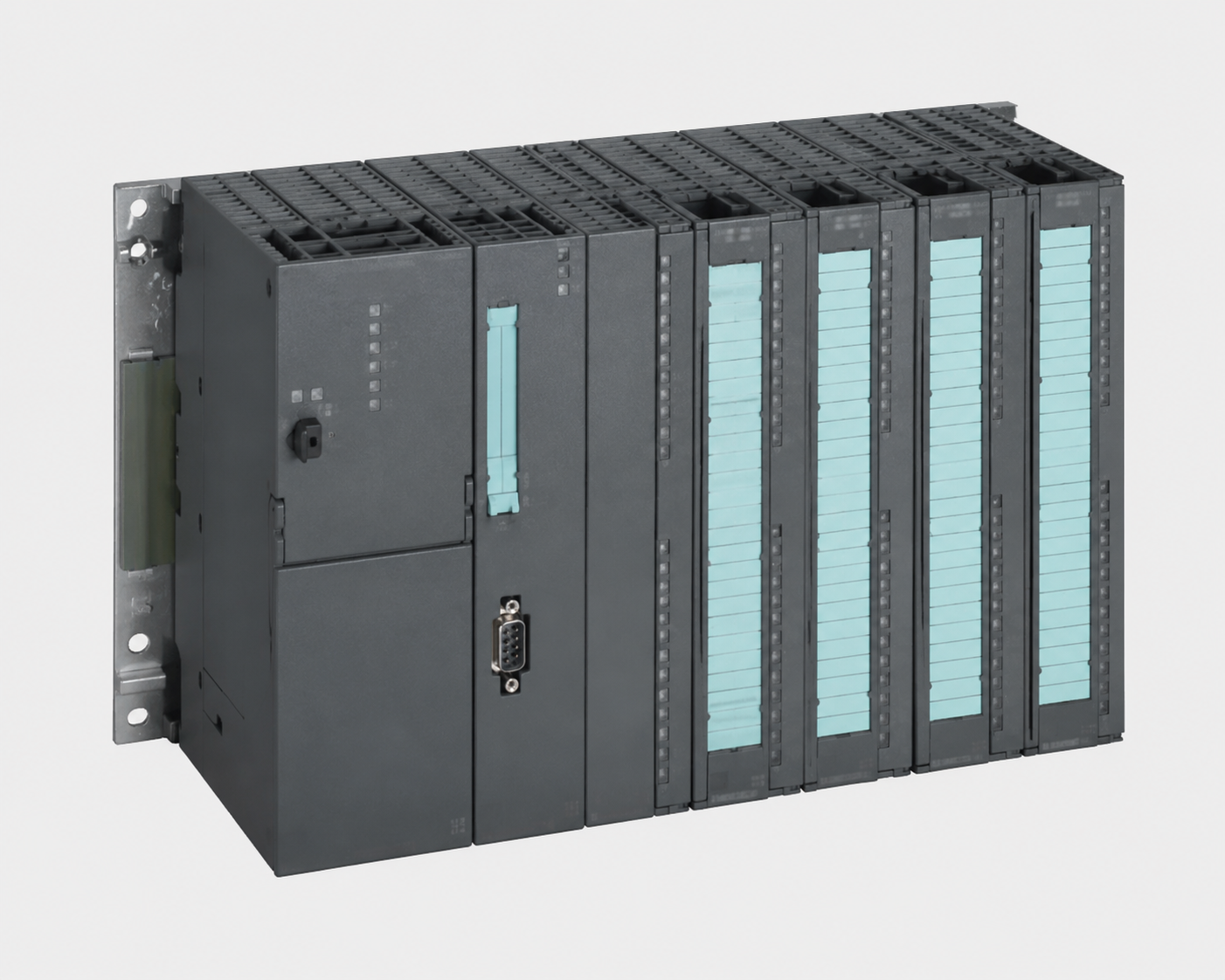
Siemens S7-500 PLC is an industrial automation controller used in factories to control machines and production systems. It helps engineers automate processes with high accuracy and reliability. This guide explains the basics in a simple way for beginners.
History of PLC Systems
PLC systems were developed to replace old relay-based control systems. Before PLCs, industries used complex wiring systems that were hard to maintain.
Now, PLCs like Siemens S7-500 make automation simple, flexible, and reliable.
What is Siemens S7-500 PLC?
A PLC (Programmable Logic Controller) is a digital device used to control industrial machines. Siemens S7-500 is designed for medium to large automation systems.
It is widely used in:
- Manufacturing plants
- Packaging industries
- Power systems
- Process control systems
Main Features of Siemens S7-500 PLC
- High processing speed
- Strong industrial reliability
- Easy programming structure
- Modular design system
- Supports complex automation tasks
This makes it suitable for modern industries where accuracy is important.
The PLC works in a simple cycle:
- 1.Reads input signals from sensors
- 2.Processes data using programmed logic
- 3.Sends output signals to machines
This cycle repeats very fast, allowing real-time control of systems.
Programming of Siemens S7-500 PLC
Programming is done using Siemens software tools. Engineers write logic to control machines.
Basic programming includes:
- Ladder Logic
- Function Block Diagram (FBD)
- Statement List (STL)
Applications in Industry
Siemens S7-500 PLC is used in many industries such as:
- Automation of production lines
- Conveyor belt systems
- Robotics control
- Energy management systems
Advantages of Siemens S7-500 PLC
- Reliable performance
- Easy maintenance
- Flexible system expansion
- Suitable for large industrial setups