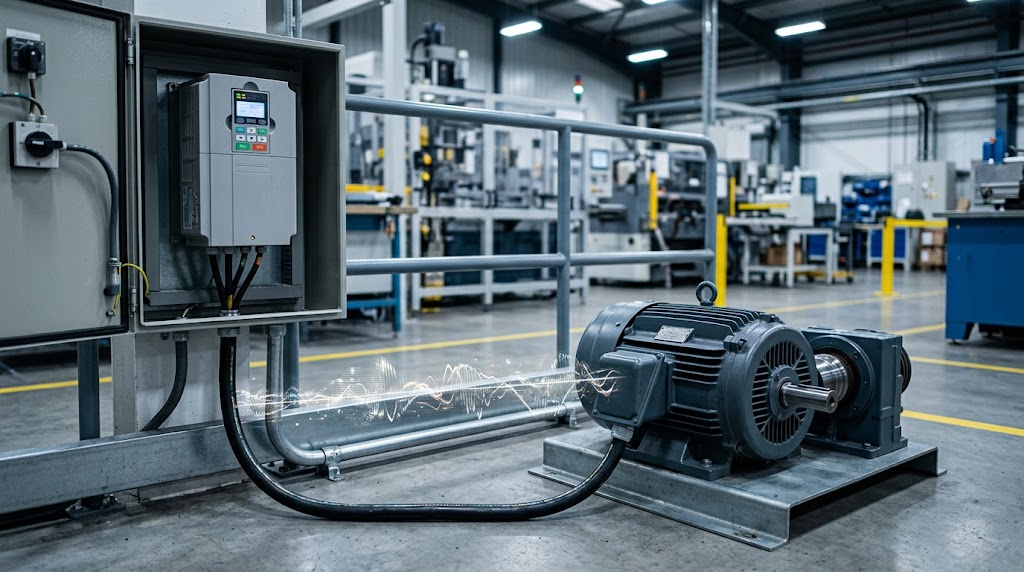
Variable Frequency Drives (VFDs) have become an important part of modern industrial automation because they provide precise control over motor speed and operation. However, a VFD can sometimes produce unwanted electrical and audible noise in a motor system. Understanding VFD motor noise is important because excessive noise may indicate installation, wiring, grounding, or drive-setting issues that should be addressed before they affect equipment performance.
What Is VFD Motor Noise?
VFD motor noise refers to unwanted electrical interference or audible sound associated with a motor operated by a variable frequency drive. Unlike a motor connected directly to a fixed-frequency power supply, a VFD uses high-speed electronic switching to create a variable-frequency output.
As a result, the voltage supplied to the motor is made up of rapidly switched pulses rather than a simple sinusoidal waveform. This switching process can create high-frequency electrical components. Consequently, these components may contribute to audible motor noise, electromagnetic interference, or additional stress within the motor system.
The amount of noise varies depending on the VFD, motor, cable arrangement, switching frequency, installation method, and operating conditions. Therefore, identifying the actual source is an important first step before applying a solution.
How Does a VFD Produce Motor Noise?
A VFD controls motor speed by changing the frequency and voltage supplied to the motor. To achieve this control, the drive uses pulse-width modulation (PWM), which rapidly switches its power devices.
During this process, the motor receives a series of fast voltage pulses. Although the motor responds to the overall electrical waveform, the rapid voltage changes can create high-frequency components. These components can interact with the motor windings, cable, and surrounding electrical system.
As a result, the motor may produce a noticeable humming, whining, or high-pitched sound. In addition, electrical interference can travel through cables and may affect nearby equipment if the installation does not provide adequate protection.
It is also important to understand that some level of audible noise can be normal during VFD operation. However, a sudden increase in noise, unusual sound, or noise accompanied by vibration or abnormal motor temperature deserves further investigation.
Common Sources of VFD Motor Noise
The source of VFD motor noise is not always the motor itself. In many installations, several parts of the system can contribute to the problem.
PWM Switching
PWM is essential for modern VFD operation, but its rapid switching creates high-frequency voltage components. Depending on the motor and drive design, these components can produce audible electromagnetic forces within the motor.
Therefore, the selected switching frequency can influence the sound produced during operation. A higher switching frequency may move some switching-related noise outside the most noticeable audible range, although it can also increase certain electrical losses and thermal effects.
Motor Cable Installation
The cable between the VFD and motor carries the rapidly switched output waveform. Consequently, cable length, construction, routing, and shielding can influence electrical interference.
Long motor cables can increase the effects of reflected voltage and high-frequency currents. For this reason, cable selection and installation should follow the VFD and motor manufacturer's recommendations rather than relying only on the cable's current rating.
Grounding and Shielding
Poor grounding can allow high-frequency electrical currents to follow unintended paths. As a result, interference may appear in nearby control circuits or other sensitive equipment.
Proper grounding and correctly terminated cable shielding help provide a controlled path for high-frequency interference. However, grounding practices should always follow applicable electrical standards and the equipment manufacturer's installation instructions.
Why Should VFD Motor Noise Be Addressed?
Noise itself does not always mean that a motor is about to fail. Nevertheless, persistent or increasing noise should not simply be ignored.
For example, high-frequency voltage effects can contribute to additional stress on motor insulation and bearings in certain installations. Moreover, electrical interference can affect sensors, communication equipment, PLC inputs, or other nearby control devices.
Therefore, reducing unnecessary VFD motor noise is not only about making an industrial environment quieter. It can also support reliable operation and help maintain a properly designed motor-drive system.
Factors That Influence Motor Noise
Several factors can affect the amount and type of noise produced when a motor operates with a VFD. Therefore, troubleshooting should consider the complete drive and motor system rather than focusing on only one component.
Switching Frequency
The switching frequency of a VFD determines how quickly its power devices switch the output voltage. This setting can influence the audible sound produced by the motor.
In some applications, increasing the switching frequency can reduce the noticeable pitch of motor noise. However, a higher setting can also increase switching losses and heat generation inside the drive and motor. For this reason, the frequency should be selected according to the manufacturer's recommendations and the requirements of the application.
Motor and Drive Compatibility
A VFD and motor should be properly matched for the intended application. Motors designed for inverter operation generally have insulation systems and construction features that are better suited to the electrical stresses produced by PWM drives.
If a standard motor is operated with a VFD without considering these factors, unwanted noise and additional electrical stress may occur. Therefore, checking the motor manufacturer's specifications is an important part of system selection.
Motor Cable Length
The length of the motor cable can also influence the electrical behavior of a VFD system. As cable length increases, the effects of high-frequency voltage pulses can become more significant.
Long cable runs may contribute to reflected-wave effects and increased common-mode currents. Consequently, installations with long motor cables may require additional measures such as output reactors, dV/dt filters, or sine-wave filters, depending on the drive manufacturer's recommendations.
Cable Routing
Motor cables should be routed carefully to reduce electromagnetic interference. Running motor cables close and parallel to sensitive signal, instrumentation, or communication cables can increase the possibility of interference.
Where possible, power and control wiring should be separated. This simple installation practice can help reduce unwanted coupling between high-power switching circuits and sensitive electronic equipment.
Practical Ways to Reduce Motor Noise
Once the source has been identified, several practical measures can help reduce unwanted noise.
Use Suitable Motor Cables
A properly selected shielded cable can help control high-frequency interference. The cable should be suitable for VFD applications and installed according to the drive manufacturer's requirements.
In addition, cable shielding should be terminated correctly. Simply using a shielded cable without proper termination may not provide the expected level of protection.
Improve Grounding
A low-impedance grounding arrangement provides a controlled path for high-frequency currents. Consequently, proper grounding can reduce interference and improve the overall electrical performance of the installation.
Ground connections should be short, secure, and designed according to applicable electrical requirements. Improper grounding should not be corrected by randomly adding connections because this can create additional problems.
Consider Output Filters
For certain installations, an output reactor, dV/dt filter, or sine-wave filter may be appropriate. These devices can reduce the effects of fast voltage changes reaching the motor.
However, the correct device depends on the VFD, motor, cable length, and application. Therefore, filter selection should be based on manufacturer specifications rather than using the same solution for every installation.
Review Drive Settings
Incorrect VFD settings can sometimes contribute to abnormal motor behavior. Switching frequency, carrier settings, motor parameters, and control mode should be reviewed against the motor and drive manufacturer's recommended values.
At the same time, settings should not be changed simply to make the motor quieter. A setting that reduces audible noise could increase electrical or thermal stress if it is unsuitable for the application.
When Is Motor Noise a Warning Sign?
Normal operating sound can vary between motors and VFD systems. However, unusual changes deserve attention.
For example, a sudden increase in noise, combined with excessive vibration, rising temperature, unstable motor operation, or unusual electrical behavior, may indicate a developing problem.
Therefore, maintenance personnel should compare current operating conditions with the system's normal behavior. Checking the motor, cable connections, grounding, drive parameters, and installation environment can help identify the source before more serious equipment problems develop.
Importance of Proper Installation
A VFD installation should be designed as a complete system. The drive, motor, cables, grounding arrangement, filters, and control wiring all interact during operation.
For this reason, following the manufacturer's installation instructions from the beginning is generally more effective than trying to correct interference after the system has been commissioned. Proper cable selection, routing, grounding, and parameter configuration can also support more reliable long-term operation.
VFD Motor Noise and Its Effects on Motor Performance
VFD motor noise can sometimes provide an early indication that something in a motor-drive system needs attention. Although some audible sound is normal during variable-speed operation, unusual or increasing noise should not be ignored.
Furthermore, electrical interference associated with the drive can affect nearby automation equipment. Sensitive sensors, communication circuits, PLC inputs, and instrumentation may experience interference when high-frequency currents travel through unintended paths.
VFD Motor Noise and Motor Insulation Stress
A VFD changes motor voltage rapidly through its switching operation. Consequently, the motor can experience fast voltage transitions that differ from the waveform produced by a conventional fixed-frequency supply.
Therefore, selecting a motor suitable for VFD operation can help support reliable performance. In addition, following the motor and VFD manufacturer's installation recommendations can reduce unnecessary electrical stress.
VFD Motor Noise and Bearing Protection
Another consideration involves the motor bearings. In certain VFD installations, high-frequency currents can travel through the motor shaft and create unwanted current paths through the bearings.
As a result, susceptible motors may develop bearing-related problems over time. Technicians may notice increased vibration, unusual bearing temperature, or a change in normal operating sound.
However, these symptoms do not automatically mean that bearing currents caused the VFD motor noise. Therefore, maintenance personnel should inspect the complete system and use suitable diagnostic methods before replacing motor components.
Maintenance for Controlling VFD Motor Noise
Regular maintenance helps technicians identify changes before they become major equipment problems. First, inspect motor terminals, cable connections, grounding points, and visible cable damage.
Next, check the relevant VFD parameters against the motor manufacturer's recommended values. At the same time, monitor motor temperature, vibration, and operating sound under normal load conditions.
It is also useful to maintain basic maintenance records. For instance, recording when unusual VFD motor noise first appeared can help technicians determine whether the sound changes with motor speed, load, or temperature.
Moreover, keeping cooling paths clean and electrical connections secure supports stable operation. A loose connection or inadequate cooling can create symptoms that may initially appear to be related to drive noise.
When VFD Motor Noise Requires Additional Filtering
Not every VFD installation needs an output filter or reactor. However, some applications may benefit from additional output-side components.
An output reactor can reduce the severity of rapid voltage changes reaching the motor. Similarly, a dV/dt filter can provide additional protection in applications where cable length or motor insulation requirements make it appropriate.
A sine-wave filter goes further by producing a smoother output waveform for the motor. Nevertheless, filter selection depends on the VFD, motor, cable length, switching conditions, and application.
Therefore, engineers should select filtering equipment according to manufacturer specifications instead of installing a filter simply because the motor produces audible noise.
Best Practices to Reduce VFD Motor Noise
A reliable system starts with suitable equipment selection. The VFD should match the motor's electrical requirements, while the motor cable should be appropriate for VFD applications.
In addition, keep motor power cables separated from sensitive control and communication wiring where practical. Proper shielding and grounding can further control high-frequency interference.
Drive settings also deserve attention. If the switching frequency needs adjustment, consider both audible noise and the resulting thermal and electrical effects. A quieter motor does not necessarily mean that the new setting provides better overall operating conditions.
Furthermore, inspect the installation whenever the normal sound changes noticeably. Comparing current conditions with the motor's previous operating behavior can help identify developing problems early.
Conclusion
VFD motor noise can result from the interaction of several electrical and mechanical factors. PWM switching, motor construction, cable characteristics, grounding, installation practices, and drive settings can all influence the final result.
For this reason, technicians should avoid relying on a single fix. Instead, they should examine the complete motor-drive system and identify the actual source before making changes.
With suitable motor and cable selection, proper grounding, correct drive configuration, and appropriate filtering where necessary, industrial facilities can reduce unwanted noise while supporting reliable motor operation.
Most importantly, unusual noise should serve as a diagnostic signal rather than simply a sound problem. Early investigation can reveal electrical interference, installation issues, or developing mechanical conditions before they cause more serious downtime.