Table of Contents
ToggleIntroduction
How Does a PLC Work? This is one of the first questions every beginner asks when learning industrial automation. A Programmable Logic Controller (PLC) is a rugged industrial computer. It controls machines and automated processes with speed and accuracy. First, it receives signals from sensors and switches. Then, it processes those signals using a stored program. Finally, it sends commands to motors, valves, lights, and other devices.
Today, PLCs play a major role in modern industries. They help factories improve productivity and reduce manual work. In addition, they increase safety and reduce machine downtime. Because of these benefits, almost every manufacturing industry uses PLC technology.
Understanding How Does a PLC Work helps you learn the basics of automation. It also makes PLC programming easier to understand. Whether you are a student, technician, or engineer, this guide will explain every step in simple language.
What Is a PLC?
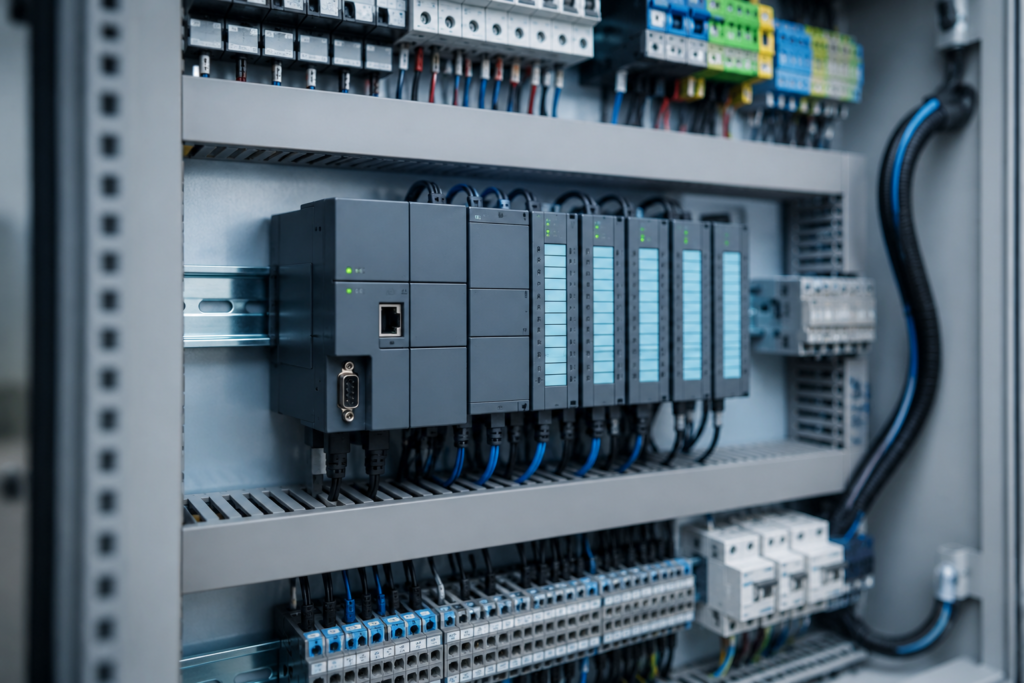
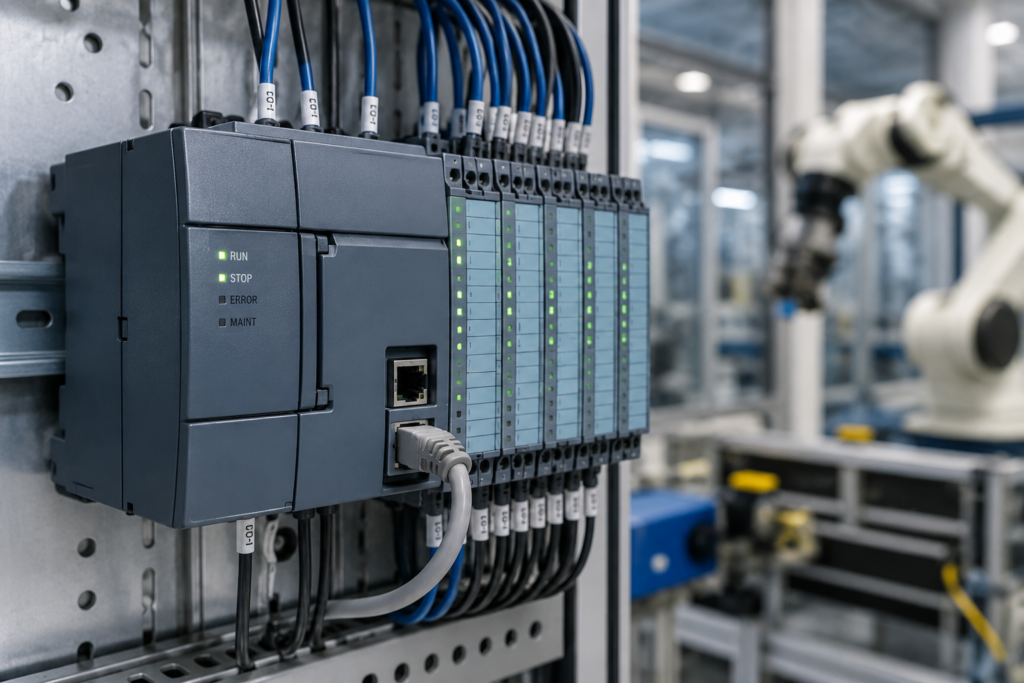
A Programmable Logic Controller (PLC) is an industrial computer designed to control machines. Unlike a normal computer, it works reliably in harsh environments. It can handle dust, vibration, heat, and electrical noise without losing performance.
Engineers use PLCs to automate industrial processes. The PLC reads input signals, makes logical decisions, and controls output devices. As a result, machines work faster and more accurately.
PLCs are common in many industries, including:
- Manufacturing plants
- Food processing factories
- Water treatment systems
- Packaging lines
- Power stations
- Chemical industries
- Textile factories
- Automotive production
Moreover, PLCs are easy to reprogram. Engineers can update the control logic without changing complex wiring. Therefore, maintenance becomes faster and more cost-effective.
How Does a PLC Work?
Now let's understand How Does a PLC Work step by step.
A PLC follows a continuous operating cycle. Engineers call this process the PLC Scan Cycle. The controller repeats this cycle many times every second. As a result, the machine responds quickly to changing conditions.
The scan cycle has four basic steps:
- Power Read all inputs.
- Execute the control program.
- Update all outputs.
- Repeat the process.
This sequence continues as long as the PLC has power.
How Does a PLC Work During Input Processing?
The first step is input processing.
The PLC checks every connected input device. It reads the current status of each sensor and switch. Then, it saves this information in its memory.
For example:
- The Start button is ON.
- The Stop button is OFF.
- The Level Sensor is ON.
- The Emergency Switch is OFF.
Because the PLC reads every input before making a decision, it works consistently and accurately.
How Does a PLC Work During Program Execution?
After reading all inputs, the PLC starts program execution.
The CPU processes the ladder logic one instruction at a time. It compares the input conditions with the programmed rules. Then, it decides which outputs should turn ON or OFF.
For example, if the Start button is ON and the safety switch is closed, the PLC starts the motor. However, if the Stop button is pressed, the PLC immediately stops the motor.
This process happens within milliseconds. Therefore, industrial machines respond almost instantly.
How Does a PLC Work During Output Processing?
After the PLC executes the program, it updates the output devices. This is the final step of every scan cycle. The CPU sends commands to the output modules. Then, the output modules control the connected equipment.
For example, imagine a water tank system. The level sensor detects that the water level is low. The PLC reads this signal during the input scan. Next, it checks the program. If the water level is below the set point, the PLC turns on the pump. As a result, the tank starts filling with water.
This process happens in just a few milliseconds. Therefore, the machine reacts quickly without human intervention.
Understanding How Does a PLC Work during output processing helps you see how automation systems respond to real-world conditions.
How Does a PLC Work in the PLC Scan Cycle?
The PLC scan cycle is the heart of every automation system. It repeats the same sequence continuously. Because the cycle is so fast, machines operate smoothly and efficiently.
A typical scan cycle includes four steps:
- Read all input signals.
- Execute the control program.
- Update all output devices.
- Perform internal diagnostics.
Then, the PLC starts the next scan cycle immediately.
Most industrial PLCs complete thousands of scan cycles every second. As a result, they detect changes almost instantly.
For example, if an emergency stop button is pressed, the PLC reads the input during the next scan. Then, it executes the safety logic and stops the motor. Finally, it updates the output module. This quick response protects both equipment and workers.
How Does a PLC Work in a Real-World Example?
A conveyor belt system is a great example of How Does a PLC Work in an industrial environment.
First, an operator presses the Start button. The PLC receives this input signal. Next, the CPU checks the ladder logic. If all safety conditions are true, the PLC energizes the motor contactor. As a result, the conveyor belt begins moving.
Now imagine that a proximity sensor detects a product. The PLC reads the sensor signal during the next scan cycle. Then, it activates a pneumatic cylinder to push the product into the correct position.
If the Stop button is pressed, the PLC immediately processes the new input. It turns off the motor and stops the conveyor safely.
This example shows how the PLC makes decisions in real time. It also explains why PLCs are trusted in modern factories.
How Does a PLC Work with Sensors and Actuators?
Sensors and actuators are essential parts of every PLC system.
Sensors collect information from the machine. They tell the PLC what is happening at any moment. Common sensors include proximity sensors, photoelectric sensors, pressure sensors, and temperature sensors.
After receiving the data, the PLC processes it according to the program. Then, it sends commands to actuators.
Actuators perform physical actions. They include motors, valves, relays, pumps, and solenoids.
For example, a temperature sensor measures heat inside an industrial oven. If the temperature becomes too high, the PLC switches off the heater and starts the cooling fan. As a result, the process remains safe and stable.
This simple sequence clearly explains How Does a PLC Work with industrial devices.
Benefits of Understanding How Does a PLC Work
Learning How Does a PLC Work offers many advantages.
First, it helps beginners understand industrial automation more easily.
Second, it improves troubleshooting skills.
Third, it prepares students for PLC programming.
In addition, engineers can design more reliable control systems.
Furthermore, maintenance teams can identify machine faults faster.
Some key benefits include:
- Better understanding of automation systems
- Faster fault diagnosis
- Improved machine safety
- Higher production efficiency
- Reduced downtime
- Better programming knowledge
- Easier system maintenance
- Greater career opportunities
Beacuse of these benefits, PLC knowledge is valuable in almost every manufacturing industry.
Common Mistakes When Learning How Does a PLC Work
Many beginners make similar mistakes while learning PLC technology.
One common mistake is memorizing ladder logic without understanding the scan cycle. However, the scan cycle is the foundation of PLC operation.
Another mistake is ignoring input and output devices. A PLC cannot control a machine without receiving accurate signals.
Some learners also skip practical examples. As a result, they understand the theory but struggle with real industrial systems.
To avoid these problems:
- Learn the PLC scan cycle first.
- Practice with simple ladder logic.
- Study real industrial applications.
- Understand sensors and actuators.
- Test every program carefully.
- Follow industrial safety rules.
These habits will improve your PLC skills over time.
Best Practices to Understand How Does a PLC Work
Learning How Does a PLC Work becomes much easier when you follow the right approach. First, understand the basic functions of a PLC instead of memorizing programming instructions. Then, learn how the PLC scan cycle works. This foundation will help you understand advanced automation concepts more quickly.
Next, practice with simple automation examples. Start by controlling a single motor or an indicator lamp. After that, move to timers, counters, and sensor-based applications. As your confidence grows, you can create more advanced PLC programs.
In addition, always test your program before using it in a real machine. Careful testing helps you find errors early and improves system reliability. Moreover, studying real industrial projects gives you practical knowledge that books alone cannot provide.
Following these best practices will help you understand How Does a PLC Work more effectively and prepare you for real industrial automation projects.
Industries That Use PLC Technology
Understanding How Does a PLC Work also explains why PLCs are essential in modern industries. Companies use PLCs because they provide fast, reliable, and accurate machine control.
Today, PLC technology is used in many sectors, including manufacturing, food processing, water treatment, pharmaceutical production, textile factories, automotive assembly, chemical plants, and power generation. Each industry depends on PLCs to improve productivity, maintain consistent quality, and reduce manual work.
For example, a food processing plant uses PLCs to control conveyors, mixers, and packaging machines. Similarly, a water treatment facility uses PLCs to monitor water levels, pumps, and filtration systems. As a result, operations remain efficient and safe throughout the production process.
Because PLCs are flexible and easy to program, they continue to play an important role in industrial automation across the world.
Why PLCs Are Better Than Traditional Relay Systems
Many factories have replaced traditional relay control systems with PLCs. Understanding How Does a PLC Work helps explain why this change has become so common.
A relay system requires extensive wiring and physical components. Any process change usually requires additional wiring and extra maintenance. However, a PLC allows engineers to update the control program without rebuilding the entire control panel.
Furthermore, PLCs respond faster than relay systems and provide better diagnostic information. They also simplify troubleshooting because engineers can monitor inputs, outputs, and program status from a single controller.
As technology continues to evolve, PLCs remain the preferred choice for industrial automation. Their flexibility, reliability, and efficiency make them suitable for both small machines and large production systems.
How Does a PLC Work in Different Industries
Understanding How Does a PLC Work becomes easier when you look at real industrial applications. Every industry uses PLCs to improve efficiency and reduce manual work. Although each process is different, the basic working principle remains the same.
For example, a food processing plant uses a PLC to control conveyors, mixers, and packaging machines. A water treatment facility uses a PLC to monitor pumps, valves, and water levels. Likewise, an automotive factory uses PLCs to control robotic arms and assembly lines.
As a result, industries achieve higher productivity, better product quality, and improved operational safety. Therefore, PLCs have become an essential part of modern industrial automation.
Safety Considerations When Learning How Does a PLC Work
Safety should always be your first priority when working with industrial automation systems. Although a PLC controls machines automatically, engineers must follow proper safety procedures before testing or modifying any program.
First, disconnect power before handling electrical wiring. Next, inspect all input and output connections carefully. In addition, test new programs in a safe environment before using them on production equipment. Finally, follow your company's safety standards and operating procedures at all times.
Good safety practices protect both people and machines. They also reduce unexpected downtime and equipment damage.
Future of PLC Technology
The future of industrial automation continues to evolve. Therefore, understanding How Does a PLC Work is more valuable than ever.
Modern PLCs now support Industrial Internet of Things (IIoT), cloud connectivity, artificial intelligence, and advanced data monitoring. These technologies allow engineers to collect production data, monitor equipment remotely, and improve system performance.
Moreover, manufacturers continue to develop faster processors, larger memory, and improved communication protocols. As a result, PLC systems are becoming smarter, more efficient, and easier to integrate with modern automation platforms.
Learning these technologies today can help you prepare for future careers in industrial automation and smart manufacturing.
Frequently Asked Questions About How Does a PLC Work
What is the main purpose of a PLC?
A PLC automates industrial machines by reading inputs, processing logic, and controlling outputs.
How Does a PLC Work in simple words?
A PLC receives signals from sensors. Then, it processes the program. Finally, it controls devices such as motors, valves, and alarms.
Why is the PLC scan cycle important?
The scan cycle allows the PLC to monitor inputs and update outputs continuously. Therefore, machines respond quickly to changing conditions.
Can beginners learn PLC operation?
Yes. Beginners can learn PLC technology by understanding inputs, outputs, ladder logic, and the scan cycle.
Which industries use PLCs?
PLCs are used in manufacturing, food processing, water treatment, oil and gas, power generation, automotive production, and many other industries.